










Tibetan Monks in Tibet: Beliefs, Daily Life, and Cultural Travel Tips
Tibet is a land deeply shaped by Buddhism, where religion influences nearly every aspect of daily life. Tibetan monks are at the heart of this spiritual tradition and continue to play an important role in Tibetan society. Although their lives are often simple and disciplined, they remain deeply respected by local people across Tibet.
If you are looking for a deeper cultural experience in Tibet, understanding the role of Tibetan monks can greatly enrich your journey. This guide explores who Tibetan monks are, what their daily life is like, where you can meet them, and how to respectfully experience Tibetan Buddhist culture while visiting Tibet.
Quick Facts About Tibetan Monks
- Religion: Tibetan Buddhism
- Language: Mainly Tibetan; some monks also speak Mandarin or basic English
- Traditional Robe Color: Dark red and saffron yellow
- Daily Routine: Prayer, study, debates, meditation, rituals
- Best Place to See Tibetan Monks: Jokhang Temple, Sera Monastery, Drepung Monastery, and Tashilhunpo Monastery
- Best Time for Monastery Visits: Morning prayer hours
- Festivals to Experience: Monlam Prayer Festival, Saga Dawa Festival, Shoton Festival, and Cham Dance Festivals
- Famous Monk Activity: Buddhist debates
Contents
 Famous Monasteries Where You Can Meet Tibetan Monks
Sacred Rituals and Ceremonies You May Witness During a Tibet Spiritual Tour
Festivals Where You Can See Tibetan Monks
How to Interact Respectfully with Tibetan Monks
Travel Tips for a Spiritual Journey in Tibet
Who Are Tibetan Monks?
The Role of Monks in Tibetan Buddhism
Tibetan monks are Buddhist practitioners who dedicate their lives to religious study, meditation, rituals, and monastic discipline in Tibetan Buddhism. In Tibetan, the word for “monk” is generally translated as “trapa,” meaning student or scholar.
Traditionally, monks were among the few people in Tibet who received formal education and studied religious texts. Although Tibetan society has changed greatly over the centuries, the title itself has remained the same.
Today, Tibetan monks continue to play an important role in local communities. They lead ceremonies, offer blessings, guide pilgrims, and maintain monastery traditions. Their influence remains deeply connected to Tibetan society and spiritual life.
Different Types of Monastic Figures
Tibetan monasteries are home to different types of monastic figures, including regular monks, respected lamas, and highly honored Rinpoches. A monk is a general member of the monastic community who follows religious discipline, studies Buddhist teachings, and participates in daily monastery life.
Some experienced and respected monks become lamas, or spiritual teachers who guide students and lead religious practices. Among these lamas, certain honored masters may receive the title “Rinpoche,” an honorary term meaning “precious one” that shows deep respect in Tibetan Buddhism.
Major Schools of Tibetan Buddhism
Tibetan Buddhism consists of several major schools, including Gelug, Nyingma, Kagyu, and Sakya. Each tradition has its own teachings, rituals, and monastic customs. The Gelug school is especially influential in Tibet and is closely associated with famous monasteries such as Sera Monastery and Drepung Monastery in Lhasa.
Nyingma is the oldest school of Tibetan Buddhism and is known as the “Red Hat” tradition. Sakya monasteries are recognizable by their red, white, and gray striped walls. Kagyu focuses on meditation and oral teachings and is known as the “White Tradition” because of the white robes worn by its followers.
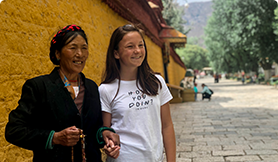
 It can be a rewarding experience to talk to Tibetan monks, guardians of Tibetan Buddhist traditions.

Join our classic Lhasa group tour to explore landmarks like the Potala Palace, Jokhang Temple, and Sera Monastery!
Daily Life of Tibetan Monks
A Typical Day in a Monastery
In addition to daily chores and monastery responsibilities, Tibetan monks spend much of their time studying, praying, meditating, and debating Buddhist teachings. They believe that this disciplined spiritual life helps lead them toward enlightenment.
A typical day begins before sunrise, when monks gather in the assembly hall for morning prayer. After prayers, which often last two to three hours, a simple breakfast of porridge and Tibetan butter tea is served.
The morning is mainly devoted to Buddhist study. Monks read scriptures, discuss Buddhist philosophy, and participate in traditional debates with senior teachers and fellow monks as part of their religious education.
In the afternoon, monks continue their study or meditation before gathering again for afternoon prayers. The day usually ends with quiet reflection and private meditation inside the monastery.
 Meditation is a daily practice for Tibetan monks.
Food, Clothing, and Living Conditions
Many Tibetan monks are not strictly vegetarian, and their daily diet is often similar to that of ordinary Tibetans, including tsampa, Tibetan butter tea, vegetables, noodles, and sometimes yak meat and mutton. However, monks from certain Buddhist traditions and those observing important religious periods may follow a strict vegetarian diet.
In addition, fish are sometimes regarded as sacred symbols in Tibetan culture and are considered one of the eight auspicious symbols in Buddhism, so many Tibetans, including monks, avoid eating fish.
The traditional robes worn by Tibetan monks vary slightly between different Buddhist schools, but their overall style remains similar. The robes are typically dark red, sometimes combined with saffron yellow garments during ceremonies and festivals.
The standard monastic clothing usually includes a sleeveless upper garment with yellow fabric panels, a lower robe, and a long shawl draped across the body. Ceremonial robes are often more elaborate and may include distinctive yellow or red hats depending on the Buddhist school.
Although monasteries are religious places, they also function as active communities. Monks help maintain monastery buildings, prepare ceremonies, welcome pilgrims, and care for sacred Buddhist objects as part of daily monastery life.
 The traditional robes worn by Tibetan monks are typically dark red, sometimes combined with saffron yellow robes.
Monk Education and Buddhist Learning
Education is one of the most important aspects of monastery life. Young monks spend years memorizing Buddhist texts and studying philosophy, rituals, logic, and debate techniques.
One of the most famous traditions is Buddhist debate, practiced at monasteries such as Sera Monastery. During debates, monks challenge each other’s understanding of Buddhist teachings through lively discussions and dramatic hand clapping.
Although the debates may look theatrical to visitors, they are a serious academic tradition used to improve logical thinking and philosophical understanding.
 The Buddhist debate is a traditional form of Buddhist education that is still practiced in modern Tibet.
Famous Monasteries Where You Can Meet Tibetan Monks
Jokhang Temple
Located in the heart of Lhasa, Jokhang Temple is considered one of the most sacred Buddhist sites in Tibet. Pilgrims from across the Tibetan Plateau travel here to pray and perform prostrations outside the temple.
Inside the temple, you can observe monks chanting in prayer halls illuminated by butter lamps. Outside the temple, pilgrims walk clockwise along Barkhor Street, the sacred pilgrimage route surrounding Jokhang Temple. The spiritual atmosphere makes this one of the best places to experience Tibetan Buddhist culture.
 Jokhang Temple is one of the best places to experience Tibetan Buddhist culture.
 Sera Monastery
Located about 3 kilometers from the city center, Sera Monastery is a must-visit site when visiting Tibet. Together with Drepung Monastery and Ganden Monastery, it is known as one of the three great monasteries of Lhasa. The monastery is especially famous for its iconic monk debates.
Drepung Monastery
Drepung Monastery is the largest monastery in the Gelug School of Tibetan Buddhism. It is renowned for its massive scale, profound religious heritage, and historical role as the main monastery of the Dalai Lamas.
Covering an area of about 250,000 square meters, Drepung Monastery was once one of the largest monasteries in the world, housing more than 10,000 monks. Its white-walled buildings spreading across the hillside resemble heaps of rice, which is why it is called “Drepung,” meaning “pile of white rice” in Tibetan.
 Once one of the largest monasteries in the world, Drepung Monastery is a great place to meet Tibetan monks.
Tashilhunpo Monastery
Situated in Shigatse, Tibet’s second-largest city, Tashilhunpo Monastery is the traditional seat of the Panchen Lama. It is famous for its golden rooftops, giant Buddha statues, and impressive monastery architecture. The peaceful atmosphere and active monastic life make it one of the most rewarding monastery visits in Tibet.
 Tashilhunpo Monastery is an ideal place to experience the peaceful atmosphere and active monastic life.
Remote Monasteries Beyond Lhasa
Beyond the famous monasteries near Lhasa, Tibet is home to countless smaller monasteries hidden among mountains, valleys, and remote villages. These less-visited monasteries often provide a deeper cultural experience.
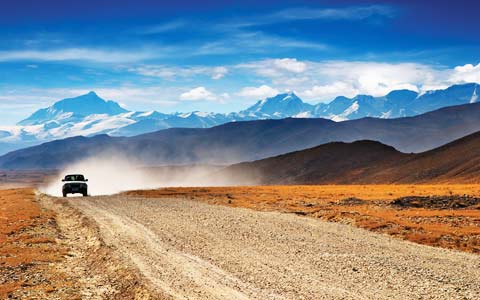
In remote regions near Everest Base Camp, you can visit Rongbuk Monastery, the world’s highest monastery, where monks continue traditional Buddhist practices against the dramatic backdrop of Mount Everest.
While exploring the Yarlung Valley, you can also visit Samye Monastery, the first Buddhist monastery built in Tibet and one of the most historically important religious sites in Tibetan Buddhism.
 As the first Buddhist monastery in Tibet, Samye Monastery is one of the best places to experience Tibetan Buddhism.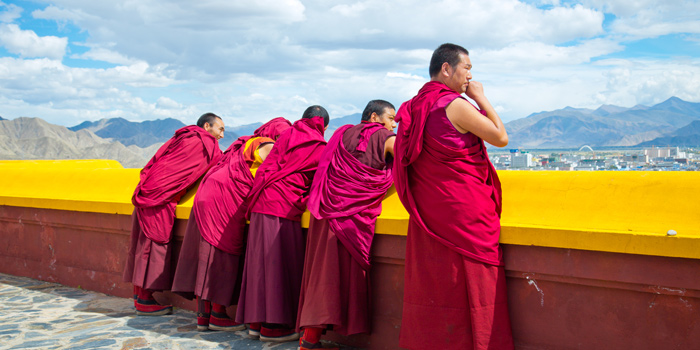
Join our Lhasa and Shigatse group tour to experience Tibetan Buddhist culture at Tashilhunpo Monastery!
Sacred Rituals and Ceremonies You May Witness During a Tibet Spiritual Tour
Monk Chanting and Prayer Ceremonies
Monk chanting ceremonies are among the most common experiences you may encounter inside Tibetan monasteries. During these ceremonies, monks sit in long rows reciting ancient Buddhist scriptures accompanied by deep horns, drums, cymbals, and bells. The atmosphere often feels both peaceful and powerful.
Witness the Famous Monk Debates at Sera Monastery
Sera Monastery is one of the best places in Tibet to observe the famous monk debates. Every afternoon, monks gather in a courtyard to debate Buddhist philosophy through dramatic gestures and symbolic hand clapping.
For many travelers, this is one of the highlights of a Tibet tour. The debates offer a rare opportunity to witness traditional Buddhist education still practiced in modern Tibet.
Butter Lamps, Incense, and Prayer Wheels
You will also notice sacred objects used in Tibetan Buddhism, including prayer wheels, butter lamps, incense burners, and colorful prayer flags. Rather than simple decorations, these objects symbolize wisdom, compassion, and blessings in Tibetan Buddhism.
 You can sometimes witness monk chanting ceremonies inside a Tibetan monastery during your visit.
Festivals Where You Can See Tibetan Monks
Monlam Prayer Festival
The Monlam Prayer Festival, also known as the Great Prayer Festival, is one of the most important religious events in Tibetan Buddhism. It is held annually during the first month of the Tibetan New Year (Losar) and lasts for about three weeks.
During the festival, thousands of monks gather in major monasteries to recite scriptures, participate in Buddhist debates, and display giant Buddha thangkas. Pilgrims and local believers come to pray and offer butter lamps, creating a sacred and festive atmosphere throughout Tibet.
 The Great Prayer Festival is one of the most important religious events in Tibetan Buddhism.
Saga Dawa Festival
Saga Dawa celebrates the birth, enlightenment, and death of the Buddha. It is one of the holiest periods in the Tibetan Buddhist calendar and takes place throughout the fourth month of the Tibetan calendar, usually falling in May or June.
During this sacred month, pilgrims walk clockwise around sacred temples and mountains while monks lead prayer ceremonies and religious activities. Both monks and local Tibetans follow traditional customs such as lighting butter lamps, observing a vegetarian diet, practicing charity, and releasing animals.
Shoton Festival
The Shoton Festival, also known as the Yogurt Festival, is one of Tibet’s most famous cultural events. The highlight is the unveiling of a giant Buddha Thangka at Drepung Monastery, where monks display a massive sacred painting on the hillside. Monks also chant scriptures, preside over religious rituals, and offer blessings at major monasteries.
Cham Dance Festivals
Cham dance festivals are among the most visually striking events held in Tibetan monasteries. The timing and frequency of these festivals vary across different monasteries. Many monasteries hold Cham ceremonies once or twice a year during major festivals such as the Shoton Festival or Tibetan New Year celebrations.
Monks are the central figures in these sacred ceremonies. Wearing large masks and richly decorated costumes, they perform ritual dances accompanied by chanting and traditional musical instruments.
 Watching Cham dances performed by Tibetan monks is one of the most visually striking experiences in Tibet.
How to Interact Respectfully with Tibetan Monks
Dress Code
Dressing modestly is essential when visiting monasteries in Tibet. Avoid revealing clothing, shorts, and slippers. Comfortable long pants, covered shoulders, and practical walking shoes are generally recommended when entering religious sites.
Photography Etiquette
Always ask for permission before taking photos of monks. When visiting monasteries, photography is usually allowed in outdoor courtyards, but many prayer halls prohibit photography. You should follow local rules and avoid using flash photography during ceremonies or inside prayer halls.
 You can take photos with Tibetan monks with their permission to remember your visit.
Temple and Monastery Etiquette
One important custom in Tibetan Buddhism is walking clockwise around monasteries, stupas, prayer wheels, and sacred sites. Speaking quietly inside monasteries is considered respectful, as monks may be praying, studying, or meditating. You should also avoid touching sacred objects unless invited to do so.
Experience Traditional Tibetan Buddhist Practices
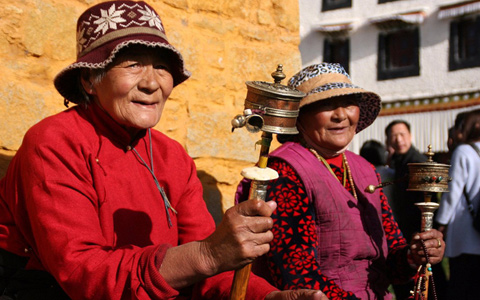
If you want to experience traditional Tibetan Buddhist culture, it is recommended to participate in simple activities such as spinning prayer wheels, observing chanting ceremonies, or receiving blessings from monks.
Visitors may also have the opportunity to speak with monks. Younger monks in larger monasteries sometimes speak basic English or Mandarin Chinese and may be happy to answer simple questions about Buddhism or monastery life.
 You can participate in activities like spinning prayer wheels to experience Tibetan Buddhist culture more deeply.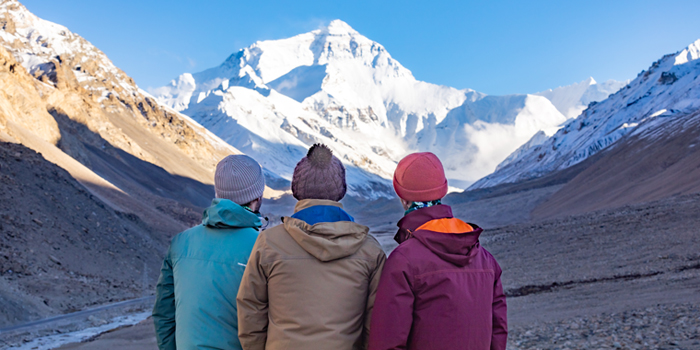
Join our popular Lhasa to Everest Base Camp tour to admire breathtaking views of Mount Everest!
Travel Tips for a Spiritual Journey in Tibet
Altitude Considerations
Many monasteries are located above 3,500 meters, and some remote monasteries are even higher. You should spend time acclimatizing slowly after arriving in Tibet and avoid intense physical activity during the first few days. Drinking plenty of water and resting properly can help reduce altitude discomfort.
Travel with Knowledgeable Local Tibetan Guides
Joining a Tibet tour with experienced local guides can greatly enrich your cultural experience in Tibet. Local guides can explain religious customs, historical background, and the meanings behind rituals that may otherwise be difficult for foreign visitors to understand.
Best Time to Experience Tibetan Monastic Life
The best time to experience Tibetan monastic life is generally from April to October, when the weather is milder and many major festivals take place. In particular, mornings are usually the best time to visit monasteries and observe activities such as chanting ceremonies and pilgrims making offerings.
 Mornings are usually the best time to visit monasteries and observe chanting ceremonies.
Quick Summary and FAQs About Tibetan Monks
Quick Summary
Tibetan monks are at the heart of Tibetan Buddhism and remain deeply connected to daily life, religious traditions, and local communities across Tibet. From chanting ceremonies and Buddhist debates to major religious festivals and pilgrimage rituals, monastery life offers travelers a unique opportunity to experience Tibet’s spiritual culture firsthand.
Whether visiting famous monasteries such as Jokhang Temple, Sera Monastery, and Drepung Monastery or exploring remote monasteries near Mount Everest and the Yarlung Valley, travelers can gain a deeper understanding of Tibetan Buddhist traditions through respectful cultural experiences and interactions with local monks.
Q1: What do Tibetan monks believe?
Tibetan monks follow Tibetan Buddhism, which emphasizes compassion, meditation, karma, and the pursuit of enlightenment.
Q2: What is the daily life of a Tibetan monk?
A monk’s daily life usually includes prayers, Buddhist study, meditation, chanting, debates, and monastery duties.
Q3: What do Tibetan monks wear?
Tibetan monks usually wear dark red robes, often combined with saffron yellow garments during ceremonies and festivals.
Q4: Are Tibetan monks vegetarian?
Not all Tibetan monks are vegetarian. Some monks avoid meat during religious periods or according to their Buddhist tradition.
Q5: Where can travelers meet Tibetan monks in Tibet?
Travelers can meet monks at famous monasteries such as Jokhang Temple, Sera Monastery, Drepung Monastery, and Tashilhunpo Monastery.
Q6: Why do Tibetan monks debate?
Buddhist debates help monks improve logical thinking and deepen their understanding of Buddhist teachings.
Q7: Is photography allowed inside Tibetan monasteries?
Photography is often allowed in outdoor areas, but many prayer halls prohibit photos or flash photography.
Q8: What is the best time to visit Tibetan monasteries?
The best time is generally from April to October, especially during major Tibetan Buddhist festivals.
Q9: Can Tibetan monks get married?
Most Tibetan monks follow monastic vows that require celibacy, so they do not marry.
Conclusion
Tibetan monks are far more than religious figures. They are guardians of Tibetan Buddhist traditions, spiritual teachers, and an important part of everyday life in Tibet. From ancient monasteries in Lhasa to remote mountain temples, monastic life continues to influence spiritual culture across the Tibetan Plateau.
If you are seeking a deeper understanding of Tibet, visiting monasteries and learning about monastic life can become one of the most meaningful parts of your journey. Travelers can experience a living spiritual tradition through chanting ceremonies, Buddhist debates, sacred festivals, and meaningful cultural encounters.
Ready to experience the spiritual heart of Tibet? Feel free to contact us for more travel information or personalized Tibet itinerary planning.




Ask a Quick Question