








Tibet vs Bhutan: Which Himalayan Journey Is Right for You?
Tibet and Bhutan both lie in the Himalayan region, but they offer remarkably different travel experiences. Tibet is a vast, high-altitude region known for iconic landmarks like the Potala Palace and Mount Everest. Bhutan, known as the Land of the Thunder Dragon, offers misty forests, peaceful valleys, and cliffside monasteries.
So which destination is right for you? This guide compares Tibet and Bhutan from every major travel perspective — including landscapes, culture, travel costs, accessibility, spiritual atmosphere, and travel style — to help you choose the Himalayan journey that fits you best.
Quick Facts: Tibet vs Bhutan at a Glance
| Category | Tibet | Bhutan |
|---|---|---|
| Location | Northern Himalayas | Eastern Himalayas |
| Geography | Vast high-altitude plateau | Mountain valleys and forests |
| Average Elevation | Over 4,000 meters | Around 2,000–3,000 meters |
| Capital City | Lhasa | Thimphu |
| Main Religion | Tibetan Buddhism | Tibetan Buddhism (Drukpa Kagyu tradition) |
| Famous Landmark | Potala Palace & Mount Everest | Tiger’s Nest Monastery |
| Travel Style | Adventure & overland exploration | Slow cultural and luxury travel |
| Budget Level | Mid-range to flexible | Generally premium-priced |
| Entry Requirement | Tibet Travel Permit + China Visa | Bhutan Tourist Visa + SDF |
| Best Travel Season | April to October | March to May & September to November |
Contents
 Tibet vs Bhutan in Location: North vs East of the Himalayas
Tibet vs Bhutan in Landscape: Sacred Highlands vs Green Mountain Valleys
Tibet vs Bhutan in Religion and Culture: Shared Buddhism, Different Atmospheres
Tibet vs Bhutan in Famous Attractions: Everest, Potala & Kailash vs Tiger’s Nest & Dzongs
Tibet vs Bhutan in Travel Style: Expedition Adventure vs Slow Himalayan Retreat
Tibet vs Bhutan in Trekking: High-Altitude Adventure vs Forest Mountain Trails
Tibet vs Bhutan in Best Time to Visit: Festivals, Weather & Seasonal Beauty
Tibet vs Bhutan in Travel Cost: Flexible Budgets vs Premium Tourism
Tibet vs Bhutan in Food and Accommodation: Modern Tibetan Hospitality vs Boutique Himalayan Luxury
Tibet vs Bhutan in Accessibility: Tibet Train & Overland Travel vs Limited Flight Access
Tibet vs Bhutan in Travel Documents: Tibet Travel Permit vs Bhutan Tourist Visa
Why Visiting Both Tibet and Bhutan Creates the Ultimate Himalayan Journey
Recommended Itinerary: 2026 Suggested Tibet & Bhutan Tours
Tibet vs Bhutan in Location: North vs East of the Himalayas
Tibet — The Vast Plateau North of the Himalayas
Tibet lies on the Tibetan Plateau north of the Himalayas and is often called the “Roof of the World.” With an average elevation above 4,000 meters, it is one of the highest inhabited regions on Earth. This vast land is home to towering snow mountains, sacred lakes, and endless grasslands.
Traveling in Tibet often feels expansive and remote. It involves long overland journeys to some of Tibet’s most famous destinations, including Everest Base Camp, Mount Kailash, Namtso Lake, and western Tibet. In Tibet, the road journey itself becomes part of the travel experience.
 Located in the northern Himalayas, Tibet is home to many snow-capped mountains and sacred lakes.
Bhutan — The Hidden Kingdom in the Eastern Himalayas
Nestled in the eastern Himalayas, Bhutan — also known as the Land of the Thunder Dragon — is a small landlocked kingdom between Tibet and India. Compared to Tibet, Bhutan is much smaller and lower in elevation, with most travel destinations situated in green valleys surrounded by mountains and forests.
As a small, landlocked Himalayan country, Bhutan feels enclosed, peaceful, and intimate. Roads wind through pine forests, river valleys, and mountain villages decorated with prayer flags and traditional Bhutanese houses. Shorter travel distances make Bhutan easier to explore while still offering spectacular Himalayan scenery.
 Bhutan is a small, landlocked Himalayan country known for its green valleys and mountain scenery.

Discover the cultural highlights of Tibet and Bhutan in one unforgettable journey.
Tibet vs Bhutan in Landscape: Sacred Highlands vs Green Mountain Valleys
Tibet — Snow Mountains, Sacred Lakes, and Endless Plateau Roads
Tibet’s landscapes are among the most dramatic in the world. The region combines snow-capped Himalayan peaks, sacred turquoise lakes, remote monasteries, and high-altitude grasslands. When traveling across Tibet, you can watch the landscapes change dramatically along the journey.
Some of Tibet’s most beautiful natural attractions include Yamdrok Lake, Namtso Lake, Mount Everest, and the remote landscapes around Mount Kailash. These places make Tibet especially appealing to travelers who enjoy wild landscapes, dramatic scenery, and the feeling of venturing into remote high-altitude regions.
 Tibet is home to many majestic snow-capped mountains, including Mount Everest.
Bhutan — Misty Forests, River Valleys, and Himalayan Villages
Bhutan, by contrast, has a much more varied landscape and range of elevations. Altitudes range from Himalayan peaks over 7,000 meters in the north to subtropical lowlands near the Indian border. Bhutan is also far more forested than Tibet, with dense forests stretching from the Himalayan slopes to the Indian border.
Bhutan’s scenery often feels peaceful and serene. The landscape features lush valleys, terraced farmland, pine forests, rivers, waterfalls, and mountain villages hidden among the hills. For travelers seeking nature and serenity, Bhutan is an ideal destination.
Tibet vs Bhutan in Religion and Culture: Shared Buddhism, Different Atmospheres
Tibet — The Spiritual Center of Tibetan Buddhism
Tibet is a deeply Buddhist region where spiritual practices and pilgrimages remain part of daily life. Colorful festivals throughout the year help preserve and celebrate local traditions. Across Tibet, you can see prayer wheels spinning beside temples, pilgrims walking kora routes around monasteries, and monks debating Buddhist philosophy in monastery courtyards.
In addition, nomadic and pastoral life remains not only an important part of Tibetan heritage, but also a living tradition that is still practiced today. This traditional way of life is closely connected to Tibet’s high-altitude grasslands and plateaus, and continues to contribute to the region’s cultural richness.
 Rows of Tibetan monks gather in prayer and study, creating a powerful spiritual atmosphere.
Bhutan — Buddhism Preserved Through National Identity
Bhutan also follows Tibetan Buddhism, particularly the Drukpa Kagyu tradition. However, Bhutan preserves and practices Buddhism differently from Tibet.
In Bhutan, religion is closely connected to national identity, traditional architecture, daily customs, and government philosophy. Buddhist values shape everything from festivals and dress to education and environmental protection.
In Bhutan, many towns feature dzongs, fortress-monasteries that serve as both religious centers and administrative headquarters. This country protects its traditions carefully, creating a calm, mindful atmosphere focused on peace and balance.
 The famous Punakha Dzong rises beside lush green hills, creating a peaceful and timeless Himalayan atmosphere.
Tibet vs Bhutan in Famous Attractions: Everest, Potala & Kailash vs Tiger’s Nest & Dzongs
Tibet — Sacred Landmarks Across the Tibetan Plateau
Tibet is a destination known for dramatic landscapes and sacred cultural traditions. Many people associate Tibet with majestic snow-capped mountains. Everest Base Camp is one of the region’s biggest highlights, while Mount Kailash is famous for both its striking appearance and deep spiritual significance in Tibetan Buddhism.
The Potala Palace in Lhasa is one of the world’s most recognizable Buddhist buildings and remains a symbol of Tibetan culture and history. Monasteries such as Jokhang Temple, Sera Monastery, and Tashilhunpo Monastery are also major attractions for visitors.
Tibet is also home to several sacred lakes, including Lake Manasarovar, Lake Namtso, and Lake Yamdrok, all known for their natural beauty and spiritual significance.
 The Potala Palace is the most iconic landmark standing majestically on Red Hill in the heart of Lhasa.
Bhutan — Cliffside Monasteries and Himalayan Dzongs
Bhutan’s most famous attraction is Tiger’s Nest Monastery, also known as Paro Taktsang. Perched dramatically on a cliff above the Paro Valley, it is one of the Himalayas’ most visually stunning monasteries. The hike to Tiger’s Nest is physically manageable and takes about 2 to 3 hours, offering beautiful scenery and a strong spiritual atmosphere.
Bhutan is also famous for its dzongs — fortress monasteries that combine religious and administrative functions. Punakha Dzong, Rinpung Dzong, Trongsa Dzong, and Tashichho Dzong are among the country’s most impressive examples of Bhutanese architecture.
In addition, Bhutan is home to wildlife sanctuaries such as Phobjikha Valley, where you may spot endangered species like the black-necked crane. Other places, such as Gasa Hot Springs, offer relaxing experiences surrounded by quiet Himalayan landscapes.
 Perched dramatically on a cliff, Tiger’s Nest Monastery is Bhutan’s most famous attraction.
Tibet vs Bhutan in Travel Style: Expedition Adventure vs Slow Himalayan Retreat
Tibet — Epic Overland Journeys Across the Plateau
Traveling in Tibet often feels like an expedition. Most trips involve long scenic drives across high mountain passes, visits to remote lakes and monasteries, and overnight stays in towns scattered across the plateau. These journeys create a strong sense of adventure and discovery.
On journeys to destinations like Everest Base Camp and Mount Kailash, you will travel long distances, witness constantly changing scenery, and truly feel the scale of the Roof of the World. It suits travelers who enjoy road trips, trekking, camping, and immersing themselves in wild spaces.
 Because destinations in Tibet are often far apart, most trips involve long scenic drives.
Bhutan — Slow Travel Through Himalayan Valleys
Bhutan encourages a slower and more relaxed style of travel. Here, travelers often spend several days exploring destinations such as Paro, Thimphu, and Punakha. The experience focuses on cultural immersion, scenic walks, monastery visits, and peaceful mountain scenery.
You will not rush between dozens of attractions; instead, you will have time to fully appreciate each valley, monastery, and viewpoint. The slower pace, lower tourist density, and quiet environment make it especially appealing for travelers seeking peace, cultural depth, and a break from busy modern life.

Explore the spiritual landmarks and local culture of Lhasa through an immersive city journey.
Tibet vs Bhutan in Trekking: High-Altitude Adventure vs Forest Mountain Trails
Tibet — Trekking Across High Himalayan Landscapes
Trekking in Tibet is defined by high altitude and dramatic landscapes. It requires physical fitness, proper acclimatization, and professional guidance.
The Mount Kailash kora is one of the world’s great pilgrimage treks and attracts both spiritual travelers and adventure hikers. Trekking routes near Everest also provide spectacular Himalayan views. Other classic routes include hikes around sacred lakes and ancient monasteries.
Trekking in Tibet is physically challenging but highly rewarding, as you walk across open landscapes surrounded by glaciers, sacred peaks, and high mountain passes.
 The Mount Kailash kora is a physically challenging but deeply spiritual trekking experience.
Bhutan — Forest Trails and Scenic Mountain Hikes
Compared to Tibet, Bhutan’s trekking and hiking options are gentler, greener, and more accessible to casual walkers. The easy two-day Bumdra Trek includes a visit to sacred Bumdra Monastery before descending to the famous Tiger’s Nest Monastery.
The popular Druk Path Trek takes you through lush forests and serene alpine lakes. The Jomolhari Trek offers stunning close-up views of majestic Mount Jomolhari, while the demanding Snowman Trek appeals only to experienced hikers.
If you enjoy nature walks, moderate hiking, and scenic cultural trekking, Bhutan is an excellent choice.
Tibet vs Bhutan in Best Time to Visit: Festivals, Weather & Seasonal Beauty
Tibet — Best Seasons for Plateau Travel and Everest Views
Tibet can be visited year-round, although the best travel season is generally from April to October, covering spring, summer, and autumn.
Spring (April–June) brings comfortable temperatures and crisp air, while autumn (September–October) is especially popular for Everest Base Camp tours because of stable weather and excellent visibility.
Summer (July and August) is Tibet’s peak tourist season, even though it is also the monsoon season. The plateau becomes warmer and greener, especially in eastern Tibet. It is also the season for major cultural events such as the Shoton Festival, famous for its giant thangka unveiling ceremonies.
Winter in Tibet is cold but surprisingly sunny. Fewer tourists and lower prices make it attractive for budget-conscious travelers. However, heavy snowfall in high-altitude areas may occasionally make parts of the region inaccessible.
 You can enjoy clear views of Namtso Lake against snow-capped mountains during Tibet’s best travel seasons.
Bhutan — Best Seasons for Festivals and Mountain Scenery
Bhutan has a more varied climate than Tibet. The best time to visit Bhutan is generally during spring (March to May) and autumn (September to November), when the weather is warm, dry, and ideal for sightseeing and trekking.
Spring offers blooming peach blossoms and rhododendrons, fresh green valleys, and mild temperatures. Autumn is known for clear Himalayan views and golden forests. Bhutan’s famous Tshechu festivals also take place during spring and autumn, where monks and local communities perform traditional masked dances.
Summer is Bhutan’s monsoon season, bringing heavier rainfall to lower-altitude areas. Winters are colder and drier, and snowfall in the mountains may occasionally affect travel conditions.
 The famous Punakha Dzong is surrounded by blooming spring scenery beside the peaceful river in Bhutan.
Tibet vs Bhutan in Travel Cost: Flexible Budgets vs Premium Tourism
Tibet — Flexible Travel Budgets
Tibet offers travel options for a wide range of budgets, and the exact cost depends mainly on the length of your trip, your itinerary, and the travel season. Tibet tours can range from budget-friendly trips of around US$500 to luxurious customized journeys costing several thousand dollars.
Tour prices usually include the guide, driver, private vehicle, and entrance tickets to major attractions. However, accommodation, meals, and transportation to Tibet are not always included.
As many attractions in Tibet are located far from one another, transportation costs make up a large part of the travel budget. Therefore, joining a Tibet small group tour is highly recommended, as you can share transportation and guide costs with others.
Visiting Tibet during winter, the off-season for tourism, can also help reduce expenses thanks to lower flight and hotel prices.
 Joining a Tibet small group tour is a good way to save money, as you can share costs with fellow travelers.
Bhutan — Premium Tourism Costs
Traveling in Bhutan is generally more expensive because international visitors must pay a Sustainable Development Fee (SDF) in addition to regular travel expenses. The fee is currently US$100 per person per day and is mainly used to support education, healthcare, and environmental protection in Bhutan.
Similar to Tibet, foreign travelers must join organized tours with local guides and vehicles. Travelers also need to pay for accommodation, meals, transportation, guide services, and entrance fees, which are usually included in standard Bhutan tour packages.
Additional expenses such as souvenirs, snacks, room service, and tips for guides and drivers are normally not included. While Bhutan is more expensive overall, it offers excellent service quality, lower tourist density, and a highly organized travel environment.
Tibet vs Bhutan in Food and Accommodation: Modern Tibetan Hospitality vs Boutique Himalayan Luxury
Tibet — Tibetan Flavors and Modern Hospitality
Tibet offers a wide range of accommodation, from simple guesthouses in remote areas to comfortable hotels in Lhasa. In major cities such as Lhasa, Shigatse, and Nyingchi, you can find a wide variety of hotels, from budget-friendly accommodations to luxury brands such as St. Regis and Shangri-La.
However, in remote or high-altitude areas such as Everest Base Camp and the Mount Kailash region, accommodation is more basic. Guesthouses and tents are usually the main options, offering essential facilities such as oxygen support and warm bedding.
Tibetan cuisine features hearty, high-energy dishes suited to life at high altitude, including momos (steamed dumplings), tsampa (roasted barley flour), yak meat, Tibetan noodles, and butter tea. In Lhasa and larger towns, you can also find Chinese cuisine and international dining options.
 Travelers enjoy a warm Tibetan-style dinner together, experiencing local hospitality in Tibet.
Bhutan — Himalayan Flavors and Boutique Comfort
Bhutan is especially known for boutique mountain lodges and peaceful resort-style accommodation. Hotels often combine traditional Bhutanese architecture with modern comfort, creating a warm and culturally immersive atmosphere.
Bhutanese food is unique and flavorful, with dishes like Ema Datshi (chili and cheese), red rice, and local soups. Because of the cold mountain climate, chili peppers are widely used in Bhutanese cuisine and are believed to help keep the body warm. Meals are often served in cozy settings with mountain or valley views.
 Traditional Bhutanese dishes feature red rice, fresh vegetables, and spicy local flavors.
Tibet vs Bhutan in Accessibility: Tibet Train & Overland Travel vs Limited Flight Access
Tibet — Multiple Entry Routes and Overland Travel
Travelers can reach Tibet through several routes. For faster access, you can take direct flights to Lhasa from major Chinese cities such as Chengdu, Beijing, Xi’an, and Shanghai. The famous Qinghai-Tibet Railway is another option that offers a scenic and unforgettable journey from mainland China to Lhasa.
You can also enter Tibet overland from Nepal via Gyirong Port, offering a spectacular Himalayan road trip between Kathmandu and Lhasa. These different routes offer travelers a variety of unique travel experiences.
 Taking the Qinghai-Tibet Railway offers a scenic and convenient way to travel from mainland China to Lhasa.
Bhutan — Limited Flights and Controlled Tourism Access
Bhutan has more limited transportation options. Most international visitors arrive through Paro International Airport, which handles a relatively small number of international flights. Because of Bhutan’s mountainous terrain, flights are more restricted and weather-dependent than in many destinations.
Overland travel is a less common option for visitors. Travelers usually need to arrive in India first before crossing the land border at Phuentsholing to enter Bhutan. This route takes much longer because the mountain roads are winding and the border entry procedures are more complicated.
 Most international visitors choose to fly to Paro International Airport to begin their Bhutan trip.
Tibet vs Bhutan in Travel Documents: Tibet Travel Permit vs Bhutan Tourist Visa
Tibet — Tibet Travel Permit Requirements
Foreign travelers to Tibet must obtain two key documents: a valid Chinese visa and a Tibet Travel Permit. Additional permits are required for visiting restricted areas such as Everest Base Camp and Mount Kailash.
All permits must be arranged through a registered local travel agency, and independent permit applications are not allowed. As a Tibet travel agency with years of experience, we can help apply for the permits on your behalf, ensuring a smooth and legal entry process.
 Every foreign traveler needs to obtain a Tibet Travel Permit to enter Tibet.
Bhutan — Bhutan Tourist Visa Process
Independent travel is not allowed in Bhutan, and all foreign tourists must use a licensed Bhutanese tour operator. Visitors must apply for a Bhutan visa and pay the Sustainable Development Fee before entering the country.
To apply for a Bhutan e-visa, you need to book a tour through a registered Bhutan travel agency, which will handle the visa application process on your behalf. The visa is approved electronically before arrival, allowing travelers to print a copy for inspection.
 Foreign travelers must apply for a Bhutan e-visa before embarking on their journey.
Why Visiting Both Tibet and Bhutan Creates the Ultimate Himalayan Journey
For travelers who love the Himalayas, combining Tibet and Bhutan creates a complete and balanced mountain experience. You get to experience Tibet’s vast high-altitude adventure, spiritual landmarks, and epic overland scenery. At the same time, you can enjoy Bhutan’s peaceful valleys, gentle trekking, boutique luxury, and well-preserved culture.
Together, they represent two different expressions of the Himalayas: raw and refined, expansive and intimate, adventurous and serene. If you have enough time, visiting both destinations allows you to experience two very different sides of the Himalayas without overlapping experiences.
Recommended Itinerary: 2026 Suggested Tibet & Bhutan Tours
8 Days Tibet Bhutan Impression Tour
This short but rewarding 8-day Tibet Bhutan impression tour is ideal for travelers who want to experience the cultural highlights of both Tibet and Bhutan in a limited time. In Tibet, you will visit famous landmarks such as the Potala Palace, Jokhang Temple, and Barkhor Street while experiencing the unique atmosphere of Tibetan Buddhism.
The tour then continues to Bhutan via Kathmandu, where you can explore the peaceful Himalayan cities of Paro and Thimphu, visit traditional dzongs and monasteries, and enjoy the unforgettable hike to Tiger’s Nest Monastery. It is a perfect introduction to two unique Himalayan cultures.
12 Days Tibet and Bhutan Scenic and Cultural Discovery Tour
This 12-day Tibet and Bhutan scenic and cultural discovery tour offers a deeper exploration of the landscapes and cultures of Tibet and Bhutan. Besides visiting the classic attractions in Lhasa, travelers will also journey to the breathtaking Lake Namtso to experience Tibet’s high-altitude scenery, nomadic grasslands, and snow-capped mountains.
The Bhutan section focuses on peaceful valleys, traditional dzongs, forested mountain scenery, and Buddhist culture. Visits to Paro, Thimphu, and Tiger’s Nest Monastery create a relaxing yet immersive Himalayan experience with greater scenic and cultural depth.
 During a Tibet Bhutan tour, you can explore the peaceful Himalayan city of Thimphu after visiting Tibet.
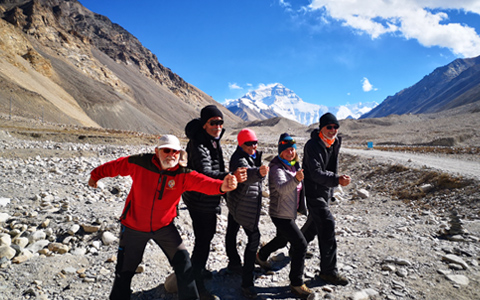
Travel across Tibet to experience Mount Everest and spectacular Himalayan scenery.
Quick Summary and FAQs About Tibet vs Bhutan
Quick Summary
Tibet and Bhutan are two extraordinary Himalayan destinations that offer very different travel experiences. Tibet is famous for its vast high-altitude landscapes, sacred monasteries, Mount Everest, and adventurous overland journeys, while Bhutan is known for peaceful valleys, forested mountains, boutique lodges, and carefully preserved traditions.
The two destinations also differ in climate, accessibility, and travel costs. Tibet is generally more flexible for different budgets and can be visited year-round, with the best travel season from April to October. Bhutan is usually more expensive due to its Sustainable Development Fee (SDF), and the best time to visit is during spring and autumn.
In general, Tibet is better for travelers seeking adventure, dramatic scenery, and spiritual exploration, while Bhutan is ideal for those looking for slow travel, cultural immersion, and a more relaxed Himalayan atmosphere. For travelers with enough time, combining both destinations creates a rich and unforgettable Himalayan journey.
Q1: Is Tibet or Bhutan better for first-time Himalayan travelers?
Tibet is better for travelers seeking iconic Himalayan landmarks and adventurous overland journeys, while Bhutan is more suitable for those preferring a slower and more comfortable cultural experience. The best choice depends on your travel style and interests.
Q2: Which destination is more expensive, Tibet or Bhutan?
Bhutan is generally more expensive because international visitors must pay the Sustainable Development Fee (SDF) in addition to tour costs.
Q3: Which destination is higher in altitude?
Tibet is significantly higher in altitude, with an average elevation above 4,000 meters. Bhutan’s main travel destinations are usually located between 2,000 and 3,000 meters.
Q4: Can foreign travelers visit Tibet or Bhutan independently?
No. Independent travel is not allowed in either Tibet or Bhutan for most foreign travelers. Visitors must arrange tours through licensed local travel agencies.
Q5: Is Bhutan easier to travel than Tibet?
Yes. Bhutan is generally easier to travel in because of its shorter travel distances, lower altitude, and slower-paced itineraries.
Q6: Can I visit Tibet and Bhutan in one trip?
Yes. Many travelers combine Tibet and Bhutan through Nepal, usually traveling between Lhasa, Kathmandu, and Paro. Combined tours offer a rich contrast between two unique Himalayan cultures.
Q7: Which destination is better for spiritual travel?
Both destinations are deeply spiritual, but the atmosphere is different. Tibet feels more intense, devotional, and pilgrimage-oriented, while Bhutan offers a calmer and more meditative spiritual environment.
Q8: When is the best time to visit Tibet and Bhutan?
The best time to visit Tibet is generally from April to October. Bhutan is best visited during spring (March to May) and autumn (September to November), when the weather is ideal for sightseeing and trekking.
Conclusion
Tibet and Bhutan are two of the Himalayas’ most extraordinary destinations, yet they offer very different travel experiences.
Tibet is vast, dramatic, spiritual, and adventurous. It is a land of sacred mountains, epic overland journeys, high-altitude landscapes, and deep pilgrimage traditions. Traveling there often feels immersive and awe-inspiring.
Bhutan, by contrast, feels peaceful, intimate, and deeply traditional. The country offers scenic valleys, traditional dzongs, monastery hikes, and slow cultural immersion in one of the Himalayas’ most well-preserved cultures.
If you are seeking the ultimate Himalayan experience, discovering both destinations together can be extremely rewarding. Simply contact us and let us help you plan a once-in-a-lifetime Himalayan journey.


Ask a Quick Question