









30 Things to Know Before You Visit Tibet (2026 Ultimate Guide)
In 2026, traveling to Tibet is easier and more comfortable than ever. Thanks to expanded Chinese visa-free policies for many countries, improved road conditions, and upgraded hotels even at Everest Base Camp, your dream trip is now well within reach.
That said, a little preparation makes a big difference. To ensure your journey is smooth, safe, and truly enjoyable, you'll still need to arrange your Tibet Travel Permit, prepare for the high altitude, and choose the best timing and transport for your adventure.
In this guide, we have gathered the 30 most important things to know before visiting Tibet in 2026. From permit secrets and the best travel seasons to expert tips on dining and accommodations, we’ve covered everything you need for a worry-free journey.
Whether you are a solo traveler joining a small group tour or a family planning a cultural exploration in Lhasa, this guide will help you make the most of your Tibetan adventure.
Ready to turn your dream into reality? Let’s explore the essential tips you need for an unforgettable journey.
Contents
 1. Can I travel independently in Tibet, or do I need to join a group?
2. Do I need a Chinese Visa to visit Tibet in 2026?
3. What is a Tibet Travel Permit and how do I get one?
4. Are additional permits required for Everest Base Camp or Mount Kailash?
5. When is the best time to visit Tibet?
6. Can I visit Tibet in the winter season?
7. Will 2026 be a busy year for Tibet tours?
8. How can I get to Tibet: by train, flight, or overland?
9. Are there direct international flights to Tibet in 2026?
10. Which Tibet train route should I take?
11. Which city offers the most frequent flights to Tibet?
12. Is altitude sickness common in Tibet, and how can I avoid it?
13. Can I get oxygen easily in major Tibetan destinations?
14. Should I bring medications for high-altitude conditions?
15. Is there an age limit for visiting Tibet?
16. How many days do I need to explore Lhasa and nearby sites?
17. What is the most popular Tibet tour for first-time visitors?
18. How long should I plan for a Mount Kailash and Lake Manasarovar trip?
19. Are luxury five-star hotels available in Tibet?
20. Do hotels at Everest Base Camp now have private bathrooms?
21. What can I eat and drink in Tibet?
22. Where can I experience authentic local life in Lhasa?
23. Is there nightlife in Tibet?
24. What currency is used in Tibet, and should I carry cash?
25. What should I pack for Tibet’s weather?
26. Do I need sun protection during my Tibet trip?
27. What basic customs and etiquette should I know in Tibet?
28. Are Tibet tours expensive, and how can I save money?
29. How early should I book my Tibet tour?
30. How can I find a reliable travel agency for a Tibet tour in 2026?
1. Can I travel independently in Tibet, or do I need to join a group?
Currently, all international tourists are required to join an organized tour to visit Tibet. This means that independent or solo travel in Tibet is not allowed. Throughout your entire trip, you will need to be accompanied by a licensed guide.
This regulation actually helps make your Tibet trip smooth and safe. Since Tibet is vast with harsh plateau weather and complex terrain, most travelers find it much easier to have professional support. This is especially true for first-time visitors who may feel overwhelmed by the planning process.
With a licensed travel agency like us helps you handle all the essential logistics, including your Tibet Travel Permit and local transportation, you can focus entirely on the incredible landscapes and spiritual heritage of Tibet.
Besides, you can choose between a private tour or a small group tour. A private tour offers a customized itinerary just for you, while a small group tour is a fantastic way to meet fellow travelers while sharing costs.
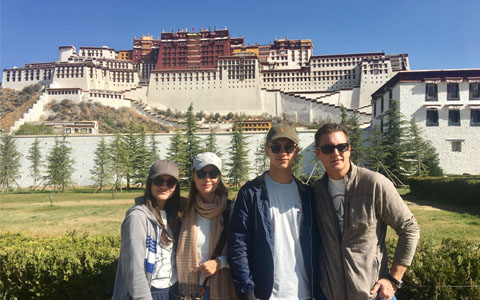
 Our guests enjoyed a memorable tour of Potala Palace with a local Tibetan guide.
2. Do I need a Chinese Visa to visit Tibet in 2026?
First of all, since Tibet is part of China, international travelers generally need a Chinese Visa to visit the region.
The good news is that in 2026, China has expanded its visa-free policy to citizens of many countries, including the UK, Australia, Japan, Canada, and many nations in Europe. If you are a citizen of one of these countries, you can enter China without a visa for up to 30 days.
For travelers from countries not covered by these policies, a standard Chinese Tourist Visa (L Visa) is still required. You can typically obtain this visa in your home country or a third country before your journey begins.
Warm Tips: Visa policies can change. If you are unsure whether you need a Chinese Visa for your Tibet trip, feel free to contact us for the latest 2026 updates.
Note: It is important to remember that even if you qualify for visa-free entry into China, you still must obtain a Tibet Travel Permit to enter the Tibet Autonomous Region.


Join our most popular Lhasa and EBC tour for a smooth experience!
3. What is a Tibet Travel Permit and how do I get one?
What is the Tibet Travel Permit?
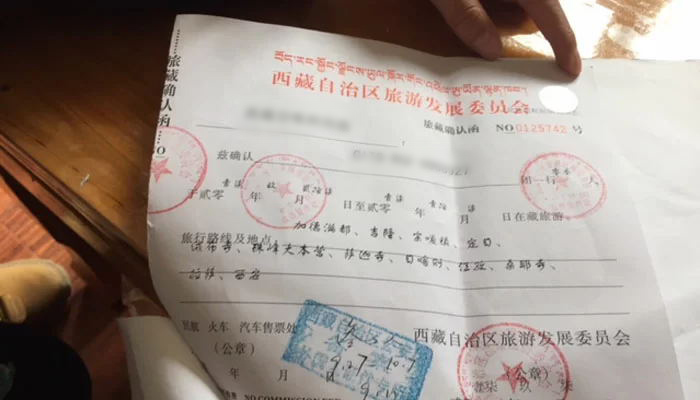
The Tibet Travel Permit (TTP) is an official entry document issued by the Tibet Tourism Bureau. It is the most essential requirement for any international traveler heading to the Tibet Autonomous Region.
What you need to know about the permit:
- Mandatory for all: It is required for all international tourists.
- Visa-Free doesn't mean Permit-Free: Even if you qualify for a Chinese visa-free entry, you still must obtain a Tibet Travel Permit.
- Essential for Transport: Without this permit, you cannot board a flight or train to Lhasa.
How to Get the Tibet Travel Permit?
Individual applications for a Tibet Travel Permit are not allowed. It must be processed through a licensed local travel agency like us. Don’t worry - we guarantee a smooth Tibet Travel permit application process for you.
Our simple steps to get your permit:
- Step 1: Book your Tibet tour with us.
- Step 2: Send us copies of your passport and Chinese Visa (if required).
- Step 3: We submit the application to the Tibet Tourism Bureau.
- Step 4: Once issued, we deliver the permit to your address in mainland China.
Note: The permit typically takes about 10-15 working days to process. To avoid any delay, we recommend start the application at least 20 days before your departure.
 Tibet Travel Permit is required for all Tibet tours.
4. Are additional permits required for Everest Base Camp or Mount Kailash?
Yes. While the Tibet Travel Permit allows you to enter Tibet and visit places around Lhasa, you will need additional travel documents to explore more remote or restricted areas of the region.
Essential Permits for Tibet’s Remote Regions:
- Aliens’ Travel Permit: This is mandatory for visiting Everest Base Camp (EBC) and the Shigatse region.
- Military Permit & Foreign Affairs Permit: These are required for sensitive border areas, including the sacred Mount Kailash and Lake Manasarovar.
How to obtain these additional permits?
The process is simple and worry-free. Just like your Tibet Travel Permit, we handle all additional permits for you as part of our comprehensive service.
Once you arrive in Lhasa, our local Tibetan guide will assist you with the final steps of obtaining these documents. All you need to do is contact us and let us know your planned itinerary in advance, and we will take care of the rest to ensure your journey is hassle-free.
 Alien's Travel Permit is necessary for visiting restricted areas such as Mount Everest and Mount Kailash.
5. When is the best time to visit Tibet?
Generally, April to October is considered the best time to visit Tibet. During these months, the weather is most favorable for travel, making outdoor activities much more comfortable.
Tibet in Spring (April-May):
This is one of the best times for photography and trekking. The skies are crystal clear, offering the highest chance of seeing the unobstructed peak of Mount Everest.
Tibet in Summer (June-August):
This is the peak season and the warmest time of year. While there is light rain, it mostly occurs at night, leaving the days fresh and lush. It is the perfect time to visit Namtso Lake and experience vibrant Tibetan festivals.
Autumn (September-October):
Similar to spring, autumn brings stable weather and excellent visibility. The landscape turns into a beautiful golden hue, making it another "gold standard" window for Himalayan mountain views and high-altitude hiking.
 Autumn is one of the best seasons to visit Tibet, with highest chance to see clear Everest views.
6. Can I visit Tibet in the winter season?
Yes, you certainly can! While many assume it’s too cold, Tibet in winter (November to March) is a hidden gem for travelers seeking a peaceful and authentic experience.
Why Visit Tibet in Winter?
- Fewer Crowds: You can enjoy iconic sites like the Potala Palace without the summer queues.
- Lower Costs: Winter is the most budget-friendly time to travel, with great deals on hotels and flights.
- Authentic Culture: You’ll see more local pilgrims in Lhasa, offering a deeper look into Tibetan spiritual life.
- Sunny Skies: Lhasa remains surprisingly sunny in winter, with crisp, clear blue skies during the day.
Warm Notice:
(1) While Lhasa and Everest Base Camp are accessible, high-altitude spots like Mount Kailash are usually closed due to heavy snow.
(2) While days are sunny, nights are very cold in winter Tibet. Bringing quality thermal layers and a heavy down jacket is a must for any winter trip to Tibet.
 Winter is the most budget-friendly time to travel to Tibet.
7. Will 2026 be a busy year for Tibet tours?
Yes, 2026 is expected to be an exceptionally popular year. It marks the Tibetan Year of the Horse, a major spiritual event that occurs only once every 12 years.
In Tibetan Buddhism, completing kora around Mount Kailash during a Horse Year is believed to bring greatly multiplied merit—equal to performing 13 koras in other years. This draws thousands of extra visitors to western Tibet.
The Saga Dawa Festival will be the busiest event of the year. Celebrating the birth, enlightenment, and parinirvana of Buddha Shakyamun, the festival falls on May 31, 2026. Both locals and international visitors flock to Mount Kailash to take part in the rituals and kora.
Our Advice for 2026:
- Expect larger crowds, especially at Mount Kailash and in Lhasa.
- Plan and book early: Secure your tour, hotels, and transportation at least 2 months in advance to get your preferred options.
 Saga Dawa Festival is the peak time to visit Mount Kailash among pilgrims and tourists.
Join our newly-updated Kailash Manasarovar tour for a hassle-free journey in 2026!
8. How can I get to Tibet: by train, flight, or overland?
Reaching the "Roof of the World" is easier than ever. You can travel to Tibet by flight, train, or overland, depending on your time, budget, and sense of adventure.
Get to Tibet By Flight (Most Convenient; 2–7 hours):
Flying is the fastest way to reach Lhasa. Major cities like Chengdu, Beijing, Xi’an, and even Kathmandu offer frequent daily flights, making it ideal if you want to maximize your time on the plateau.
Get to Tibet By Train (Most Scenic; 20–50 hours):
Trains to Tibet run daily or every other day from seven gateway cities in mainland China. Traveling on the Qinghai-Tibet Railway, you’ll pass through high-altitude prairies, snow-capped mountains, and vast plateaus, offering a truly unforgettable journey.
Get to Tibet By Overland (Most Adventurous; several days):
For the ultimate road trip, you can reach Tibet overland via five highways. The most popular routes are Chengdu to Lhasa via the G318 Highway and Kathmandu to Lhasa via the Friendship Highway.
Overland travel lets you experience landscapes and local villages up close, making it perfect for adventurous travelers.
 You can take the train to Tibet and enjoy scenic landscape along Qinghai-Tibet Railway.
9. Are there direct international flights to Tibet in 2026?
Yes! In 2026, there are two direct international flight routes to Tibet, making traveling to the plateau by air much more convenient for global travelers.
Kathmandu to Lhasa Flight
This is the quickest way to travel from Nepal to Tibet, and was once the only international flight to Tibet. Currently, the flight from Kathmandu to Lhasa runs 2 to 5 times a week and takes only about 1.5 hours to reach the "Roof of the World."
Operated by Himalaya Airlines, the flight offers a spectacular "birds-eye view" of the Himalayas, including Mount Everest, on clear days.
Singapore to Lhasa Flight
The Singapore to Lhasa flight is the newer route that is incredibly convenient for tourists from Southeast Asia. Operated by West Air, it typically runs three times a week. The flying duration is about 10 hours and 10 minutes with a stopover in Chongqing.
Singapore to Lhasa Flight Schedule
| Route | Flight No. | Dep. | Arr. | Duration | Frequency |
|---|---|---|---|---|---|
| Singapore to Lhasa | PN6426 | 04:55 | 15:20 | 10:25 hrs | Tues, Thur, Sat |
| Lhasa to Singapore | PN6425 | 17:40 | 03:55(+1) | 10:15 hrs | Mon, Wed, Fri |
 The Kathmandu to Lhasa flight offers a bird-eye view of the Himalyas.
10. Which Tibet train route should I take?
While there are several gateway cities in mainland China, the Xining to Lhasa train route is the most recommended choice for most travelers.
First, Xining is the official start of the Qinghai-Tibet Railway. Starting here ensures you see the most iconic landscapes, including the Tanggula Mountains and Kekexili Nature Reserve.
Also, it is the shortest train ride to Lhasa, taking about 21.5 hours. This allows you to experience the world’s highest railway in comfort without spending two nights on a train.
What’s more, since Xining sits at an elevation of around 2,200 meters, staying there for a day before your train departs is a great way to help your body adjust to the altitude.
Warm Tips:
Train tickets are in high demand, especially during the 2026 peak season. To ensure you have a smooth experience, we guarantee soft sleeper train tickets if you book your Tibet train tour with us!
 We guarantee soft sleeper ticket for your Xining to Lhasa train journey.
11. Which city offers the most frequent flights to Tibet?
If you are looking for the most flexible way to fly to the plateau, Chengdu is undoubtedly the best gateway city for your journey.
Chengdu offers the highest number of daily flights to Lhasa. Currently, there are over 20 daily flights departing from both Chengdu Shuangliu (CTU) and Tianfu (TFU) airports.
The flight from Chengdu to Lhasa is also one of the quickest routes, taking only about 2 to 2.5 hours. With flights departing as early as 6:00 AM and as late as 9:00 PM, it’s easy to find a time that fits your international connection or travel schedule.
Beyond Lhasa, Chengdu also provides direct flights to other Tibetan regions, including Nyingchi, ideal for travelers who prefer a lower-altitude start, and Shigatse.
Warm Tips:
Before beginning your Tibet adventure, consider spending a day or two in Chengdu to explore local highlights, including the famous Giant Panda Breeding Base and the city’s vibrant culture.
 Chengdu is the best flight gateway for a Tibet journey.
12. Is altitude sickness common in Tibet, and how can I avoid it?
Yes, due to the high elevation of the Tibetan Plateau (averaging 4,000 meters), most tourists will experience mild altitude sickness. Common symptoms include headache, dizziness, and fatigue.
However, there is no need to worry—most cases are mild, and your body will typically adjust within a few days of proper acclimatization.
Here are some effective ways to avoid severe altitude sickness in Tibet:
- Acclimatize in Lhasa: Spend at least 2 to 3 days in Lhasa (3,650m) before heading to higher elevations like Everest Base Camp. This is the most effective way to adjust.
- Take it Easy: Avoid strenuous activity or running during your first 48 hours.
- Stay Hydrated: Drink plenty of water and avoid alcohol or smoking during the first few days.
- Eat Light: Focus on high-carb meals and avoid overeating, as digestion is slower at high altitudes.
Warm Tips: To ensure your safety, our tourist vehicles are equipped with oxygen bottles, and our experienced local guides closely monitor all travelers, providing professional assistance whenever necessary.
 Our tourist vehicles are equipped with high pressure medical oxygen cylinder.
13. Can I get oxygen easily in major Tibetan destinations?
Yes! Oxygen is widely available across the most popular travel destinations in Tibet, so you can feel safe and comfortable throughout your trip.
Most hotels in major Tibetan cities, such as Lhasa, Shigatse and Nyingchi, are equipped with oxygen supply systems. Some high-quality hotels even offer diffuse oxygen supply rooms, which help you sleep better as your body adjusts.
Even at higher elevations like Everest Base Camp, oxygen is available in the tent guesthouses and the Rongbuk Monastery hotels.
You can also purchase portable oxygen bottles at local shops and pharmacies throughout Tibet. If you’re heading to remote or high-altitude areas like Mount Kailash, it’s a good idea to have a few on hand just in case of an emergency.
For extra peace of mind, we provide a sufficient supply of oxygen in our vehicles, and our expert guides are always available to assist you whenever needed.
 Oxygen is available in rooms at Rongbuk Hotel near Everest Base Camp, Tibet.
14. Should I bring medications for high-altitude conditions?
Preparing a small medical kit is a smart way to ensure a comfortable journey in Tibet. While we provide support, having your own familiar supplies is always recommended.
Consult Your Doctor: Before your trip, we highly recommend visiting your doctor to discuss altitude sickness medications (such as Diamox). They can advise if these are suitable for you based on your medical history.
Bring Regular Medications: Don't forget to pack a sufficient supply of any personal medications you take daily. It can be difficult to find specific international brands in remote areas of Tibet.
Pack a Basic First-Aid Kit: It is helpful to carry a simple kit with essentials like:
- Pain relievers (for mild headaches)
- Cold and flu medicine
- Remedies for stomach upset or motion sickness
- Band-aids and antiseptic wipes
 You may need to prepare some medications for your Tibet tour.
15. Is there an age limit for visiting Tibet?
The short answer is no! There is no official age limit for visiting Tibet. We have successfully welcomed a wide range of travelers, from young children to seniors in their 80s.
For seniors, as long as you are in good health and do not have serious heart or lung conditions, you can absolutely enjoy the beauty of the plateau. We often recommend a slower-paced itinerary to ensure a comfortable experience.
Kids are more than welcome to visit Tibet! For a family trip in Tibet, we generally suggest that children be old enough to communicate how they are feeling, which helps parents and guides better monitor their acclimatization process.
Warm Tips: The most important factor is your physical condition, not your age. We highly recommend a physical check-up before your trip to ensure you are fit for high-altitude travel.
 Our guests visited Tashilunpo Monastery in Shigatse with their young children.
16. How many days do I need to explore Lhasa and nearby sites?
For travelers with limited time, we recommend spending 4 to 5 days in and around Lhasa. This timeframe allows you to get a true first impression of Tibet without feeling rushed.
Recommended 4-5 Day Lhasa Tour Route:
Day 1: Arrival & Rest. After arriving, focus entirely on resting at your hotel to let your body begin acclimatizing.
Day 2-3: the Heart of Lhasa. Explore the majestic Potala Palace, the revered Jokhang Temple, witness the famous monk debates at Sera, and discover the massive Drepung Monastery.
Days 4-5: Nearby Wonders. Take a day trip to the turquoise Yamdrok Lake or the historic Ganden Monastery to see the stunning landscapes beyond the city.
Warm tips: Our Lhasa city tours are designed to cover the city’s iconic landmarks and surrounding sites. We offer an authentic experience suitable for both first-time visitors and seasoned travelers.

Join our 5-day Lhasa to Yamdrok Lake tour and experience the stunning turquoise waters!
17. What is the most popular Tibet tour for first-time visitors?
For first-time travelers, the Lhasa to Everest Base Camp (EBC) overland tour is the most popular choice. It offers the best value for a complete Tibet experience, perfectly combining the cultural highlights and natural scenery of the plateau.
Why Lhasa to EBC tour is the Top Choice:
No Trekking Required: Unlike the Nepal side, the Tibetan EBC is accessible by well-paved roads. You can drive directly to the base camp, making it suitable for travelers of all ages and fitness levels.
Safe & Gradual Ascent: The route follows a gradual ascent. Starting with three days in Lhasa allows your body to acclimatize properly before heading to the higher altitudes of the Himalayas.
The Best View of Everest: You get a clear, unobstructed view of the North Face of Mount Everest. Watching the sunrise or sunset over the peak is a true once-in-a-lifetime experience.
Deep Cultural Connection: This journey helps you get closer to local life and culture. You’ll have opportunities to visit local families at the lakeside of Yamdrok Lake, and stay in traditional Tibetan tents at the base camp.
Quick Facts of Lhasa to Everest Base Camp Tour:
- Travel Route: Lhasa - Yamdrok Lake - Gyantse - Shigatse - Tingri - Everest Base Camp - Shigatse - Lhasa
- Duration: The classic journey takes 8 days, though it can be tailored to be shorter or longer.
- Altitude: From 3,650 m at Lhasa to around 5,000 at the base camp.
- Highlights: Potala Palace, Yamdrok Lake, Gawula Pass, Tashilhunpo Monastery, Rongbuk Monastery, Everest Base Camp.
 Enjoy the sunrise at Mount Everest Base Camp in Tibet with our Lhasa to Everest Base Camp overland tour.
18. How long should I plan for a Mount Kailash and Lake Manasarovar trip?
Mount Kailash and Lake Manasarovar are located in the remote western Tibet, about 1,600 kilometers from Lhasa. Due to the high altitude and long distance, we recommend a 15-day overland tour from Lhasa, to ensure a safe and comfortable experience.
Why the 15-day Kailash Itinerary is Ideal:
Proper Acclimatization: Starting in Lhasa and traveling overland allows your body to adjust gradually before you begin the high-altitude trek.
The Full Experience: This timeframe covers all the major highlights, including the Potala Palace, Everest Base Camp, and Yamdrok Lake, before reaching western Tibet.
The Sacred Kora: It provides the necessary 3 days to complete the spiritual trek (Kora) around Mount Kailash at a comfortable pace.
Recommended Lhasa to Mount Kailash Route:
- Day 1 - 3: Arrival and sightseeing in Lhasa.
- Day 4 - 7: Drive to Everest Base Camp and through the vast plains of Saga to reach Darchen.
- Day 8- 10: The 3-day Mount Kailash Kora (trekking from Darchen and back).
- Day 11-15: Return journey via Shigatse to Lhasa for your departure.
Warm tips: Our 15-day Mount Kailash and Lake Manasarovar group tour is our most popular route. With professional guides, oxygen supplies, and reliable vehicles, we handle the logistics so you can focus on the journey of a lifetime!
 Join our 15-day Mount Kailash and Lake Manasarovar tour and experience the 3-day Mount Kailash Kora with professional guides.
19. Are luxury five-star hotels available in Tibet?
Yes! Accommodation conditions in Tibet have greatly improved, and you can now find luxury five-star hotels in Tibet’s major cities, such as Lhasa, Shigatse, and Nyingchi.
For those wishing to enjoy a luxury trip in Tibet, you can find high-end services at international brands like The St. Regis Lhasa Resort, InterContinental Lhasa Paradise, and Shangri-La, as well as boutique Tibetan hotels like Songtsam Linka Lhasa.
To ensure a comfortable sleep and easy acclimatization, these hotels provide advanced oxygen supply systems directly in the guest rooms or via 24-hour oxygen bars.
Many of these hotels are conveniently located in downtown Lhasa, offering breathtaking views of the Potala Palace and easy access to the city’s historic sites.
Warm Tips: While luxury options are excellent in major cities, accommodations in remote areas like Everest or Kailash are more basic. We always ensure quality options available in each region to ensure your 2026 trip is as comfortable as possible.
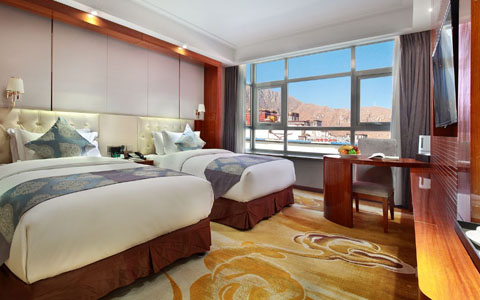
 Enjoy breathtaking views of the Potala Palace from the Shangri-La Hotel rooms in Lhasa.
20. Do hotels at Everest Base Camp now have private bathrooms?
Yes! The Rongbuk Hotel near the historic Rongbuk Monastery has recently been upgraded to offer a more comfortable stay at Everest Base Camp.
When staying at Rongbuk Hotel, you can now enjoy:
- Private bathrooms in standard rooms
- In-room oxygen supply and heating for added comfort at high altitude
- Breathtaking views of Mount Everest from select rooms
Book your Everest Base Camp tour with us and experience these conveniences for a truly unforgettable stay.
 Rongbuk Hotel now offers rooms with stunning views of Mount Everest.
Explore exotic Tibet on this overland journey across the Roof of the World!
21. What can I eat and drink in Tibet?
Tibet offers a delicious mix of local and international cuisine, so you’ll never go hungry during your trip.
You can savor authentic Tibetan dishes such as tsampa (roasted barley flour), yak meat (served in stews or steaks), Tibetan noodles (thenthuk), and momo (Tibetan dumplings). These hearty dishes are filling and flavorful, giving you a true taste of the region’s culture and traditions.
If you prefer familiar flavors, Western and Asian cuisines are easy to find in major cities like Lhasa and Shigatse. You can enjoy pizza, burgers, pasta, or sample Indian, Nepalese, and Chinese dishes, making it easy for every traveler to find something they love.
And for drinks, be sure to try Tibetan sweet tea and butter tea, which are the daily beverages of the local people. For the adults in the party, the locally-brewed Barley Wine (Chang) is a must-try for a festive experience.
 Our guests enjoy tasting Tibetan sweet tea at local teahouses in Lhasa.
22. Where can I experience authentic local life in Lhasa?
To truly get closer to local life and culture, it’s important to look beyond the famous landmarks and step into the daily rhythm of the city.
Top Local Cultural Experiences in Tibet:
- Visit a traditional sweet tea house: These teahouses are the social hubs of Lhasa. Sit back with a cup of sweet tea, and chat with locals—it’s a relaxing way to experience Lhasa like a Tibetan.
- Join the Barkhor Street kora: Walking clockwise around the Jokhang Temple alongside pilgrims is a powerful way to feel the spiritual heartbeat of the city.
- Explore old city markets: Wander the narrow alleys of the Barkhor area to see locals trading everything from prayer wheels to traditional yak butter.
Warm Tips:
Our local guides take you to their favorite neighborhood teahouses, giving you a more authentic experience away from the main tourist crowds.
 Walk clockwise around Jokhang Temple with pilgrims to experience Lhasa like a local Tibetan.
23. Is there nightlife in Tibet?
Yes! While nightlife is primarily centered in Lhasa, the city offers a wonderful mix of traditional culture and modern relaxation.
Top Evening Experiences in Tibet:
- Famous bars & teahouses: Visit iconic spots like Makye Ame on Barkhor Street, or explore the many cozy bars in the old city, often featuring live Tibetan folk music.
- Spectacular Shows: Don’t miss the Princess Wencheng live-action performance. This grand outdoor musical tells an epic historical story against the backdrop of the Lhasa mountains.
- Illuminated Landmarks: A nighttime stroll at the Potala Palace Square is a local favorite, offering breathtaking views of the palace glowing against the night sky.
Warm Tips:
When enjoying the nightlife, remember to limit alcohol consumption, especially during your first few days. Alcohol can increase the risk of altitude sickness, so it’s best to celebrate responsibly while your body acclimates!
 Our guests enjoy the stunning night view of Potala Palace in Lhasa.
24. What currency is used in Tibet, and should I carry cash?
In Tibet, the official currency is Chinese Yuan (RMB/CNY). You’ll find that Alipay and WeChat Pay are widely accepted across most Tibetan cities and tourist areas, making cashless payments convenient for everyday purchases.
However, it’s a good idea to carry a small amount of cash for special situations, such as temple donations or buying snacks from small local vendors in remote areas like Everest Base Camp and Mount Kailash.
Please note that international credit cards are generally only accepted at a few high-end hotels and large, tourist-oriented shops in Lhasa. Having some cash on hand ensures a smoother experience throughout your trip.
 It is recommended to carry a small amount of RMB cash when visiting Tibetan temples.
25. What should I pack for Tibet’s weather?
Tibet’s weather is famous for having "four seasons in a single day." Even in the summer, temperatures can drop sharply after sunset, so the key to staying comfortable is layering.
Essential Tibet Tour Packing List:
- Clothing Layers: Pack breathable base layers, a fleece or wool mid-layer, and a high-quality windproof and waterproof jacket. For those heading to Everest or Kailash, a warm down jacket is essential even in July or August.
- Sun Protection: The plateau has very high UV radiation. Don't forget high-SPF sunscreen, lip balm with SPF, polarized sunglasses, and a wide-brimmed hat to protect your skin and eyes.
- Footwear: Comfortable, broken-in hiking boots or sturdy walking shoes are a must, especially for visiting monasteries with many stairs or for trekking routes.
- Skin Care: The air is extremely dry. Bring heavy-duty moisturizer, nasal spray, and eye drops to stay comfortable in the arid climate.
 Hiking boots or sturdy walking shoes are a must when climbing Potala Palace.
26. Do I need sun protection during my Tibet trip?
Yes, absolutely! Due to the high altitude and thin atmosphere, the UV radiation in Tibet is significantly stronger than at sea level. Even on cloudy or cold days, the sun can burn your skin much faster than you might expect.
Essential Sun Protection Tips:
- Sunscreen & Lip Balm: Use broad-spectrum SPF 50+ sunscreen and a lip balm with SPF. Reapply frequently throughout the day.
- Eye Protection: Polarized sunglasses are a must to protect your eyes from the intense glare, especially near snow-capped mountains and lakes.
- Cover Your Skin: Wear a wide-brimmed hat and lightweight, long-sleeved clothing. A neck gaiter (buff) is also helpful to prevent both sunburn and windburn.
Don't let the cool breeze fool you—the sun is still powerful! Keeping your skin protected is key to staying comfortable and energized during your 2026 adventure.
 Polarized sunglasses and sunscreen are essential when traveling in Tibet.
Explore the scenic Namtso Lake and the majestic Mount Everest with our well-designed tour!
27. What basic customs and etiquette should I know in Tibet?
Tibetan people are known for their hospitality, but showing respect for their deeply rooted traditions is essential. Following local etiquette will help you have a more meaningful and respectful experience.
Key Taboos and Etiquette in Tibet:
- Temple Etiquette: Always walk clockwise around temples, stupas, and prayer wheels. When inside a temple, remove your hat and sunglasses, and avoid pointing with a single finger (use an open palm instead).
- Photography: Always ask for permission before taking photos of local people. Inside most temple chapels, photography is strictly prohibited or requires a paid permit.
- Respectful Dress: When visiting monasteries, wear modest clothing. Avoid wearing shorts, short skirts, or sleeveless tops.
- Interactions: Do not touch the top of a Tibetan person's head (including children), as the head is considered a sacred part of the body.
By following these simple etiquette rules, you’ll not only show respect for Tibetan culture but also enjoy a more authentic and rewarding travel experience.
 Our guests posed for photos with local Tibetans in Lhasa after obtaining their permission.
28. Are Tibet tours expensive, and how can I save money?
Tibet tours are not exactly cheap, as traveling in this high-altitude region involves special permits, transportation, and professional guides. However, with some planning, you can make your trip more affordable without missing out on the experience.
How to Save Money on Your Tibet Trip:
- Join a Small Group Tour: This is the most effective way to cut costs. By sharing the price of the guide, vehicle, and fuel with other travelers, you can save 20–50% compared to a private tour.
- Travel in the Off-Season: Visiting during the winter (November to March) or the "shoulder" months (April to early June, late October) offers much lower rates for hotels and flights.
- Take the Train: Opting for the Tibet Train instead of flying is not only more budget-friendly but also provides incredible plateau scenery.
- Eat at Local Teahouses: Dining where the locals do is both authentic and very affordable. A hearty bowl of Tibetan noodles and sweet tea costs very little.
Warm Tips:
To help you plan for 2026, we offer an Early Bird Discount of 5% for small group tours booked at least 3 months in advance. Booking early is the best way to secure the best value for your Tibet journey!
 Joining our Tibet small group Tour is the most effective way to cut costs.
29. How early should I book my Tibet tour?
To ensure a smooth and stress-free journey, we recommend booking your tour at least 30 to 60 days in advance.
Why you should book early:
- Permit Processing: It takes about 10–15 working days to process your Tibet Travel Permits. Booking early ensures all paperwork is finalized and delivered to you before you head to Lhasa.
- Train and Flight Tickets: Train tickets to Lhasa are in high demand, especially during the peak summer months and holidays. Booking early gives you the best chance of securing a sleeper berth.
- Hotel Availability: The best boutique hotels and popular 5-star accommodations in Lhasa fill up quickly. By booking in advance, we can secure your preferred room types.
30. How can I find a reliable travel agency for a Tibet tour in 2026?
Finding the right travel agency is one of the most important steps for your Tibet trip. Here’s how to identify a trustworthy partner for the 2026 season:
Key Standards for Tibet Travel Agency:
- Proven decades of experience: Choose a team with a long-standing history. At Tibet Tour (tibettour.org), we bring over 30 years of experience serving international travelers, making us a pioneer in the industry.
- Local offices & regional support: A reliable agency should have a strong physical presence. Our headquarters in Lhasa, along with branch offices in Chengdu and Kathmandu, ensures seamless logistics whether you enter Tibet from mainland China or Nepal.
- Top-rated customer feedback: Always check an agency’s reputation on independent platforms. We maintain a 4.8/5.0 rating on TripAdvisor and Trustpilot, consistently earning Travelers' Choice awards for authentic guest experiences.
- Professional expertise: A reliable partner offers more than just a driver. We provide expert Western-oriented guides, oxygen-equipped vehicles, and transparent pricing with no hidden costs.
Warm tip: Communication is a great test of reliability. Reach out to our travel consultants—their speed, accuracy, and friendliness will give you a preview of the high-quality service you can expect on the plateau!
 We have a professional team of local Tibetan guides ready to assist you on your Tibet tour.
More FAQs about Traveling to Tibet
(1) Is it safe to travel to Tibet in 2026?
Yes, it is very safe. Tibet remains one of the safest regions in Asia for international travelers. The main safety concern is altitude sickness, which can be managed with proper acclimatization and our expert guidance.
(2) Can I apply for the Tibet Travel Permit by myself?
No. According to regulations, individual travelers cannot apply for the permit. It must be processed through a licensed travel agency as part of a pre-booked Tibet tour.
(3) Which is better to avoid altitude sickness: flying or the train?
The train is often preferred. While not a "cure," the gradual ascent from Xining helps your body adjust more slowly than flying. However, resting well upon arrival in Lhasa is the most critical factor regardless of how you arrive.
(4) Is Tibet open all year round?
Yes, Tibet is open to travelers year-round. There are no seasonal closures, and each month offers a unique experience—from the warm summer festivals to the crystal-clear mountain views of winter.
(5) Is it safe for the elderly to visit EBC in Tibet?
Yes, with proper preparation. We have successfully hosted many travelers in their 70s and 80s. We provide oxygen during the trip, and newly upgraded accommodations with better facilities at Everest Base Camp help to ensure comfort.
(6) Is it possible for families with kids to visit Tibet?
Absolutely. Tibet is a wonderful destination for families. We recommend children be at least 4 years old, and we can customize a slower-paced itinerary to ensure the little ones stay comfortable and energized.
(7) If I enter Tibet from Nepal, can I use my existing Chinese visa?
Yes. You can now use your existing Chinese visa to enter Tibet from Nepal. There is no need to obtain a separate Chinese Group Visa, making the crossing from Kathmandu much more convenient.
(8) Can I use my credit card in Tibet?
Only in limited places. Credit cards are accepted at 5-star hotels and some high-end shops in Lhasa. For most restaurants and vendors, Alipay, WeChat Pay, or cash are necessary.
(9) Is there 24-hour hot running water in Tibet hotels?
Yes, in major cities. Most hotels in Lhasa and Shigatse provide 24-hour hot water. In remote areas like Kailash, hot water is available but may be subject to specific hours due to the extreme environment.

Join our classic Kathmandu to Lhasa overland tour for a smooth adventure!
Conclusion: Is Visiting Tibet Worth the Effort?
Absolutely—Tibet is worth every bit of effort! While a trip to the “Roof of the World” requires special permits, a little extra planning, and some adjustment to the high altitude, the rewards are truly incomparable.
There’s no other place on Earth where you can experience such a profound blend of ancient spirituality, dramatic Himalayan landscapes, and a culture that remains vibrant and authentic despite the modern era.
In 2026, Tibet is more accessible and comfortable than ever. Improved roads, high-quality hotel facilities (even at Everest Base Camp) and expanded Chinese visa-free policies for many countries make this the perfect year to turn your Tibetan dream into reality.
At Tibettour.org, we handle all the logistics so you can focus on soaking in the beauty of the plateau. With over 30 years of experience, we take care of everything—from your Tibet Travel Permit to oxygen-equipped vehicles and expert local guides.
Contact us today to plan your 2026 Tibet adventure! Whether you’re seeking a spiritual retreat, a photography journey, or a family exploration, your trip will be smooth, enjoyable, and truly memorable.




Ask a Quick Question