







Lhasa to Kathmandu Overland Tour Guide: Step-by-Step for Your Ultimate Himalayan Trip
The Lhasa to Kathmandu overland trip is the most popular way to travel from Tibet to Nepal, offering an unforgettable blend of breathtaking Himalayan scenery and deep Tibetan culture experiences.
Stretching about 1,300 kilometers along the famous Friendship Highway, the route is well-paved for the most part. This makes the journey accessible year-round and perfect for all kinds of travelers—whether you are journeying with family, exploring solo, or seeking a grand adventure.
For the ultimate experience, we highly recommend the classic 7-day itinerary. It is designed with a gradual ascent to help you acclimatize comfortably while ensuring you don’t miss iconic highlights such as Mount Everest and Yamdrok Lake.
Read our easy-to-follow guide with more insider tips for your Lhasa to Kathmandu overland in 2026. From the best travel times and permit checklist to real road conditions, accommodations, and local dinning, we’ve got everything you need for a safe, smooth and unforgettable adventure!
Quick Facts: Lhasa to Kathmandu Overland at a Glance
- Total Distance: Approximately 1,300 kilometers
- Standard Duration: 7 days / 6 nights (Ideal for safe altitude acclimatization)
- Elevation Change: Lhasa (3,650m) → Shigatse (3,800m) → Everest Base Camp (5,000m) - Gyirong (2,800m) - Kathmandu (1,400m)
- Border Crossing: Gyirong Port (Tibet side) → Rasuwagadhi (Nepal side)
- Required Documents: Chinese Visa, Tibet Travel Permit, and Aliens’ Travel Permit
- Nepal Entry Visa: Visa on Arrival (VoA) at the Rasuwagadhi border (Requires USD cash)
- Road Condition: 100% paved highway in Tibet side; bumpy mountain road in Nepal side
- Best Travel Months: April to June (Spring) & September to November (Autumn) for the clearest Everest views
Contents
 What is the Best Itinerary to Travel Overland from Lhasa to Kathmandu?
What are the Must-See Highlights along the Lhasa to Kathmandu Overland Route?
Should I Travel Overland or Fly from Lhasa to Kathmandu?
What Documents Do I Need for a Lhasa to Kathmandu Overland Trip?
How Much Does a Lhasa to Kathmandu Overland Trip Cost?
What Are the Road Conditions Like from Lhasa to Kathmandu?
When is the Best Time to Travel Overland from Lhasa to Kathmandu?
Where Should I Stay and What Food Can I Try along the Route?
How Do I Prepare for Altitude Sickness and What Should I Pack?
Why Should I Travel with a Local Tour Operator?
What is the Best Itinerary to Travel Overland from Lhasa to Kathmandu?
When planning your Lhasa to Kathmandu overland adventure, choosing the right route and pace is key. The best itinerary balances breathtaking sightseeing with smart altitude acclimatization.
Best Itinerary: The Classic 7-day Route via Everest Base Camp
The ultimate way to experience this journey is the Classic 7-day Lhasa to Kathmandu overland itinerary via Everest Base Camp (EBC).
Why is this the best choice? It follows a gradual, stepped ascent, giving your body plenty of time to adjust to the high altitude. By spending the first three nights at lower elevations in Lhasa, you reduce the risk of altitude sickness before reaching the high point: sleeping near the foot of Mount Everest.
Along the way, you’ll see Tibet’s major cultural and natural highlights—without feeling rushed, so you can truly enjoy every moment of this incredible journey.
Daily Itinerary of 7-day Lhasa to Kathmandu Overland Trip
Here is the practical day-by-day breakdown of the journey, including driving distances, altitudes, and where you will rest each night.
Day 1: Arrival in Lhasa – Welcome to the Roof of the World
- Your guide will meet you and transfer you to your hotel. There is no sightseeing today—the best thing to do is rest and let your body start adjusting to the thin air.
- Overnight Stay: Lhasa (3,650 m)
Day 2: Lhasa Sightseeing – Monastic Debates & Culture
- Visit Drepung Monastery (once the world's largest monastery) and Sera Monastery, where you can watch the famous and lively afternoon monk debates.
- Overnight Stay: Lhasa (3,650 m)
Day 3: Lhasa Sightseeing – Iconic Palaces and Sacred Circuits
- Visit the majestic Potala Palace, the sacred Jokhang Temple, and enjoy the bustling Barkhor Street pilgrimage circuit.
- Overnight Stay: Lhasa (3,650 m)
Day 4: Lhasa - Yamdrok Lake - Gyantse - Shigatse (360 km, 8 hrs of driving)
- Wind up mountain passes to witness the turquoise Yamdrok Lake, drive right past the massive Karo La Glacier, and visit the historic Gyantse town before arriving in Tibet's second-largest city.
- Overnight Stay: Shigatse (3,800 m)
Day 5: Shigatse - Lhatse - Tingri - Everest Base Camp (350 km, 7hrs of driving)
- Cross the legendary Gawu La Pass for a panoramic view of five peaks above 8,000 meters, and watch the sunset over the north face of Mount Everest.
- Overnight Stay: Rongbuk Guest House or Tent Hotel at EBC (5,000 m)
Day 6: EBC to Gyirong Town (330 km, 6 hrs of driving)
- Catch the morning glow on Everest, drive past the gorgeous Peiku Tso Lake with views of Mt. Shishapangma, and then descend into the lush Gyirong Valley.
- Overnight Stay: Gyirong Town (2,800 m)
Day 7: Gyirong Port to Kathmandu (160 km, 7-8 hrs of driving)
- Say goodbye to your Tibetan guide, cross the border into Nepal, and drive to Kathmandu.
- Overnight Stay: Kathmandu (1,400 m)
Route Summary of 7-day Lhasa to Kathmandu Overland Trip
This 7-day itinerary takes you from Tibet to Nepal, visiting iconic landmarks such as Potala Palace, Yamdrok Lake, and Mount Everest.
- Altitude Change: You’ll start comfortably at 3,650 m in Lhasa, reach an awe-inspiring 5,000 m at Everest Base Camp, and then descend to just 1,400 m when you arrive in Kathmandu.
- The Landscape: From the vast, sun-drenched Tibetan Plateau to the snow-capped peaks of the Himalayas, and then into the lush, green, sub-tropical valleys of Nepal.
- The Ride Experience: Smooth, well-paved highways all the way to EBC and Gyirong. After crossing into Nepal, the route becomes a rugged, unpaved mountain track, giving you an adventurous overland experience.
 Our classic 7-day Lhasa to Kathmandu overland tour travels via Everest Base Camp.

Explore exotic Tibet on this overland journey across the Roof of the World!
What are the Must-See Highlights along the Lhasa to Kathmandu Overland Route?
The overland journey from Lhasa to Kathmandu is more than just a 1,300-kilometer drive—it’s a moving gallery of landscapes and a deep dive into Tibetan history and culture. Here are the top landmarks you won’t want to miss:
1. Potala Palace (Lhasa)
Dominating Lhasa’s skyline, Potala Palace is a 13-story red-and-white masterpiece and Tibet’s iconic symbol. Walking inside brings you face-to-face with dazzling golden stupas and centuries of history.
Photo Tip: Head to Potala Palace Square or Chakpori Hill just after sunset. You can catch the palace glowing beautifully against the dark blue twilight sky.
 Enjoy panoramic views of Potala Palace from Chakpori Hill in Lhasa.
2. Jokhang Temple & Barkhor Street (Lhasa)
This is the spiritual heart of Tibet. The energy here is amazing—the air is thick with the scent of yak-butter lamps, and you will see local pilgrims walking the sacred prayer circuit around Jokhang Temple.
Photo Tip: Go up to the rooftop terrace of the temple. It is the perfect spot to frame the golden rooftop sculptures with the bustling street below.
 Visit the golden rooftop terrace of Jokhang Temple in Lhasa.
3. Drepung Monastery (Lhasa)
Drepung was once the largest monastery in the world. Walking up its winding paths feels like exploring a giant, peaceful village built right into the hillside.
Photo Tip: Shoot from the lower courtyards looking up to capture the massive scale of the white buildings stacked up the mountain slope.
 Visit the white monks houses at Drepung Monastery in Lhasa.
4. Sera Monastery (Lhasa)
Famous worldwide for its lively monk debates. Every afternoon (except Sunday), hundreds of monks gather in a courtyard, using loud hand claps and expressive gestures to debate Buddhist philosophy.
Photo Tip: Keep your camera on silent and turn off the flash. Zoom in on the monks' animated facial expressions and flying red robes.
 Our guests enjoyed watching monk debates at Sera Monastery in Lhasa.
5. Yamdrok Lake
One of Tibet’s three holiest lakes. As you cross the mountain pass, the landscape suddenly opens up to reveal a stunning, winding lake with water that shifts from bright turquoise to deep sapphire blue.
Photo Tip: Take a panoramic shot of Yamdrok Lake from the top of the pass, or walk down to the shoreline to get a photo of beautifully decorated local yaks against the blue water.
 Enjoy the panoramic view of Yamdrok Lake during the Lhasa to Kathmandu overland tour.
6. Karo La Glacier
You don't even have to leave the highway to see this ice giant. It hangs right beside the road at over 5,000 meters, close enough that you can easily see the deep cracks in the ancient ice.
 Take photos with the spectacular Karo La Glacier during the Lhasa to Kathmandu overland tour.
7. Gawu La Pass
One of the most spectacular mountain passes in the world. From the 5,210-meter viewing platform, you get a completely clear, panoramic view of the majestic Himalayas, including five peaks above 8,000 meters (including Everest).
Photo Tip: Use a wide-angle lens to capture the dizzying, zigzagging switchback roads below contrasting against the massive wall of snow-capped giants on the horizon.
 Enjoy a breathtaking panoramic view of the Himalayas at Gawula Pass, including Mount Everest.
8. Mount Everest & Rongbuk Monastery
Standing at Everest Base Camp (EBC) is the ultimate highlight of the trip. Unlike the Nepal side, the Tibet side offers a completely wide-open, unobstructed view of the legendary North Face right in front of you.
Photo Tip: Head to Rongbuk Monastery. Framing the ancient, weather-beaten Tibetan stupa in the foreground with the massive white wall of Everest behind it makes for an incredible photo.
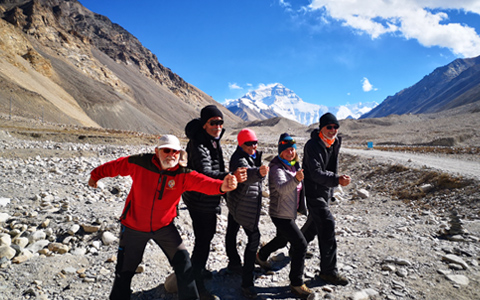
 Our guests enjoy spectacular views of Mount Everest from Rongbuk Monastery near Everest Base Camp.
Should I Travel Overland or Fly from Lhasa to Kathmandu?
Traveling between Tibet and Nepal offers two options: a quick 1.5-hour flight or a 7-day overland road trip. While flying is faster, the overland journey is widely considered far more rewarding. Here’s why the drive is worth every moment.
The Dramatic Landscape Shift
Flying means missing one of the most breathtaking geographic transitions on earth. On the road, the scenery changes dramatically before your eyes.
You’ll start on the wide-open and arid Tibetan Plateau, climb through the towering Himalayas past Mount Everest, and finally descend into the lush, green, sub-tropical valleys of Nepal. No flight can replicate this visual journey.
The Ultimate Tibet Highlights
An overland trip isn't just transit—it is a full vacation. Driving along the Friendship Highway allows you to see every major landmark we mentioned above, including spending a night right in front of Mount Everest Base Camp.
If you fly, you miss out on seeing the holy lakes, the glaciers, and the historic monasteries along the way.
Cost vs. Experience Value
At first glance, a flight from Lhasa to Kathmandu might seem cheaper than a full 7-day tour package. However, when you look at the experience value, the road trip wins easily.
The overland cost includes your transport, expert local guides, permits, accommodations, and a week's worth of unforgettable adventures. It turns a simple transit day into a true bucket-list journey.
Quick Comparison Table: Driving vs. Flying
| Feature | Overland Road Trip (Recommended) | Non-Stop Flight |
|---|---|---|
| Travel Time | 7 Days / 6 Nights | Approx. 1.5 Hours |
| Scenery | Full view of the Tibetan Plateau, Everest, and lush Nepalese valleys | A quick, distant view of mountain tops from a window seat |
| Altitude Adaptation | Gradual & Safe: You slowly drive up, giving your body time to adjust. | Sudden: You land directly at high altitude if going reverse, or miss the plateau entirely. |
| Key Highlights | Includes Yamdrok Lake, EBC, Gyantse, and Shigatse. | None |
| Travel Experience | An immersive adventure through two distinct cultures | A standard, uninspiring airport-to-airport transit |
 Spend a night at EBC and enjoy the sunrise over Mt. Everest during your overland journey from Lhasa to Kathmandu.
What Documents Do I Need for a Lhasa to Kathmandu Overland Trip?
To travel overland from Lhasa to Kathmandu, you’ll need a few essential documents. The good news is that we’ll take care of almost all the complicated paperwork for you.
Here’s a simple, easy-to-follow checklist to make sure you have everything ready for this overland adventure.
1. Passport & Chinese Visa (You Need to Prepare)
Because Tibet is an autonomous region of China, international tourists generally need a Chinese Visa to enter.
- Passport Validity: First, make sure your passport is valid for at least 6 months from your entry date.
- Standard Chinese Tourist Visa (L-Visa): If your country requires a visa, you can easily apply for one through the Chinese embassy or visa application center in your home country.
2026 Bonus: Chinese Visa-free Policy
In 2026, China has expanded its visa-free entry for citizens of over 50 countries. These include the UK, Australia, Canada, Germany, France, Italy, Spain, the Netherlands, New Zealand, and many more.
If your country is on the visa-free list, you can enter China without a visa for up to 30 days. In this case, you’ll only need your passport and the Tibet Travel Permit to start the journey.
Not sure if you qualify? Feel free to contact us, and we will check the latest 2026 visa exemption list for your nationality.
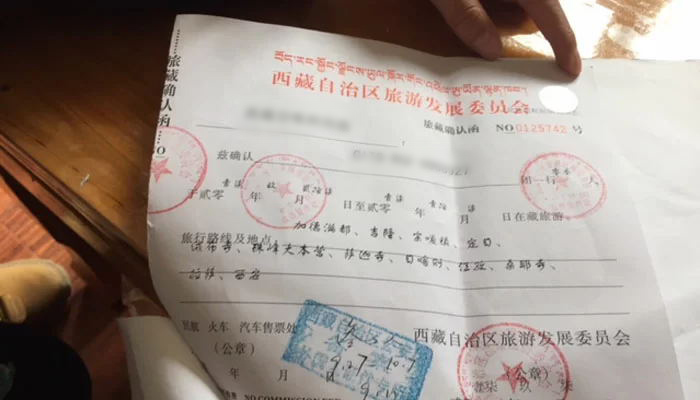
2. Tibet Travel Permit (We Will Handle)
What it is?
This is the most important document for your trip. It is an official entry permit issued by the Tibet Tourism Bureau. Without it, you cannot even board a flight or train to Lhasa.
How to get it?
You cannot apply for this permit yourself. As your local tour operator, we will apply for and secure this permit for you. All you need to do is send us copies of your passport (and Chinese Visa, if applicable) at least 20–30 days before your trip.
Note: Even if you enter China visa-free under the new 2026 policy, you still strictly need the Tibet Travel Permit.
 Tibet Travel Permit is required for all Tibet tours.
3. Aliens’ Travel Permits (We Will Handle)
What it is?
The standard Tibet Permit covers Lhasa, but because the Friendship Highway takes you into remote border zones like Shigatse and Mount Everest Base Camp (EBC), a secondary permit is required.
How to get it?
Don't worry about this at all. We will completely arrange this for you after you arrive in Lhasa as part of your seamless itinerary planning. Your guide will take care of the checkpoints while you sit back and enjoy the views.
 Alien's Travel Permit is necessary for visiting restricted areas such as Mount Everest.
4. Nepal Entry Visa (Get it at the Border)
What it is?
This is the visa that allows you to legally cross the border bridge and enter Nepal.
How to get it?
You can easily get a Nepal Visa on Arrival (VoA) right at the Rasuwagadhi border post (the Nepalese side of the Gyirong border).
How we help?
When you travel with us, our Nepalese team will meet you right at the border bridge and guide you step-by-step through the customs and visa procedures. Just remember to bring some USD cash for the visa fee (approx. $30 for 15 days) and two passport photos!
 You can easily get a Nepal Visa on the Nepalese side of the Gyirong border.
Get all Tibet travel documents well-arranged by joing our Lhasa to Kathmandu tour!
How Much Does a Lhasa to Kathmandu Overland Trip Cost?
The cost of a Lhasa to Kathmandu overland tour depends mainly on your travel style. Because independent travel is not allowed in Tibet, you must join an organized tour. Your two main choices are a Small Group Tour or a Private Tour.
Here is a straightforward look at what you can expect to spend, what is included in the price, and how to get the best value for your budget.
Small Group Tours (Best for Solo Travelers & Budget Conscious)
Price Range: $989 - $1,200 per person
The Experience: Joining a small group tour is the most budget-friendly way to make the journey. By sharing the vehicle, fuel, and guide costs with other travelers, you save significantly. Group tours follow our classic 7-day route and allow you to make friends with travelers from all over the world.
What’s Included: Travel documents including Tibet Travel Permit, shared tourist vehicle, local English-speaking Tibetan guide, some meals, quality 3-star or 4-star hotel stays (twin-sharing), entry tickets for all listed attractions.
Private Tours (Best for Families, Couples, Seniors & Photographers)
Price Range: Typically 2 to 3 times the price of a group tour, depending on your group size, hotel upgrades, and custom route extensions.
The Experience: If you want a flexible pace, extra photo stops, or are traveling with your own family, a private tour is ideal. The price per person drops fast as you add more people to your private group (e.g., 4–6 travelers). It gives you 100% control over your schedule and hotel selections.
What’s Included: Everything in the group tour, but fully upgraded. You get a private vehicle, a 1-on-1 dedicated private guide, and the flexibility to upgrade your hotels to cozy boutique properties or 5-star luxury resorts.
Money-Saving Tips for Budget Travelers
If you want to experience this epic Himalayan crossing without breaking the bank, use these expert insider tips:
- Travel During the Shoulder Seasons: Avoid the busy summer months (July–August). Traveling in April to early June or September to November offers lower tour rates, cheaper hotels, and much clearer views of Mount Everest!
- Avoid the Single Supplement: Group tour prices assume double occupancy. If you travel solo in Tibet, let us pair you with a traveler of the same gender to completely skip the single room fee.
- Eat Like a Local: Since lunches and dinners are out-of-pocket, ask your guide to show you local Tibetan teahouses and noodle shops. You can get a filling meal of Tibetan momos or warm noodle soup for just a few dollars.
- Book Early for Special Discounts: Our 7-day cross-border group tours are popular and fill quickly. Book at least 3 months in advance to secure your spot and enjoy a 5% discount.
 Join our Lhasa to Kathmandu overland small group tour to save on your travel cost.
What Are the Road Conditions Like from Lhasa to Kathmandu?
The road conditions from Lhasa to Kathmandu are generally good, and can be divided into two sections: Lhasa to Gyirong and Gyirong Border to Kathmandu. Here's what you can expect on each leg of the journey.
Lhasa to Gyirong: Well-Paved, Smooth & Scenic Road
The entire drive on the Tibet side—from Lhasa all the way to the border—is incredibly smooth and a total joy to ride. Thanks to heavy modern investments, the roads here are 100% paved, smooth asphalt highways.
This includes the famous road to Everest Base Camp. Even as you wind along zig-zag mountain roads and cross high passes over 5,000 meters, the road remains safe and comfortable.
Standard tourist vans and buses can handle this section easily. You can just sit back, relax, and keep your camera ready for the jaw-dropping window views.
Gyirong to Kathmandu: Relatively Rough and Bumpy Road
Once you cross customs at Gyirong Port and enter Nepal at Rasuwagadhi, the road changes dramatically. The final 160 kilometers into Kathmandu are rugged, mostly unpaved, and bumpy.
Because this region suffers from heavy seasonal rains and frequent landslides, the route consists mostly of dirt paths, gravel tracks, and narrow mountain ledges carved alongside deep river gorges.
Even though it’s a short distance, the drive takes about 7-8 hours. Luckily, you are in great hands! With our comfortable SUVs and experienced local Nepali drivers who know these cliffs inside and out, this final stretch is completely safe, manageable, and transforms into a true, unforgettable overland adventure.
 The road from Lhasa to the Gyirong Border on the Tibet side is well paved and comfortable for overland travel.
When is the Best Time to Travel Overland from Lhasa to Kathmandu?
Choosing the right time for your trip makes a huge difference, especially when you want a clear view of Mount Everest. While this route is open year-round, each season offers a completely different experience. Here is a simple breakdown of what to expect throughout the year:
Spring & Autumn: The Absolute Best Months (April to June & September to November)
The Experience:
These are the golden windows for the Lhasa to Kathmandu overland tour. The weather is stable, dry, and pleasantly cool during the day. Roads are in excellent condition, with minimal rain or snow.
Why it’s great?
This is the absolute best time for Everest visibility. Because the air is crisp and free of rain clouds, your chances of seeing the unobstructed, clear North Face of Everest from EBC or Gawu La Pass are incredibly high.
Seasonal Highlights:
In Spring, you will see wild peach blossoms blooming in the lower valleys against snowy peaks. In Autumn, the plateau turns a beautiful golden brown, and the deep blue skies are completely flawless.
Summer: The Peak Season (July to August)
The Experience:
Summer brings warmer temperatures, higher oxygen levels on the plateau, and vibrant green landscapes. It is the most popular time for travelers taking summer vacations.
Seasonal Highlights:
The Tibetan grasslands are lush, green, and filled with roaming yaks and traditional nomadic Tibetan festivals like Horse Racing Festival. The weather is warm enough that you won't need heavy winter jackets during the day.
Note on the Nepal Monsoon:
While Tibet stays relatively dry, summer is the peak monsoon season in Nepal. The final leg of the drive from the Gyirong border to Kathmandu may experience heavy downpours. Checking weather forecast before the trip is recommended.
Winter: Perfect for Budget Travelers (December to March)
The Experience:
Winter on the Tibetan plateau is cold, sunny, and peaceful. While high passes can occasionally see snow, the sun shines brightly almost every day, making the daytime temperatures feel much warmer than they actually are.
Why it’s great?
This is the cheapest time to travel. Tour prices drop significantly, hotels offer massive discounts, and the top attractions like the Potala Palace are completely free of crowds. Plus, winter air is incredibly dry, meaning Everest visibility is nearly 100% perfect.
Seasonal Highlights:
You get to experience Lhasa at its most authentic. The city fills with local Tibetan pilgrims who travel from all over the plateau to pray during the winter off-season.
Quick Comparison: Lhasa to Kathmandu Seasons at a Glance
| Season | Avg. Temperature Range | Everest Visibility | Road Safety & Comfort | Seasonal Highlights |
|---|---|---|---|---|
| Spring (Apr - Jun) | 5°C to 18°C | Excellent(Clear, sunny skies) | High: Roads are dry and very safe | Blooming wild blossoms; perfect photography weather. |
| Summer (Jul - Aug) | 12°C to 23°C | Low (Often hidden by monsoon clouds) | Moderate: High risk of mud and delays on the Nepal side | Lush green grasslands; lively festivals; higher oxygen levels. |
| Autumn (Sep - Nov) | 2°C to 15°C | Excellent (Deep blue, crisp skies) | High: Perfectly dry, smooth driving conditions | Golden autumn landscapes; stunning clear reflections on holy lakes. |
| Winter (Dec - Mar) | -10°C to 8°C | Perfect (Crisp, cloudless days) | Moderate: Occasional ice/snow on high Tibet passes | Authentic pilgrim atmosphere in Lhasa; lowest tour & hotel prices. |
Note: Temperatures drop significantly at night, especially at Everest Base Camp, where winter nights can easily plunge to -15°C (5°F) or lower!
 Our guests gathered in wintertime Lhasa before starting their overland journey from Lhasa to Kathmandu.
Where Should I Stay and What Food Can I Try along the Route?
A 1,300-kilometer journey across the Himalayas takes you from bustling modern cities to remote mountain outposts. Here’s a clear look at where you’ll sleep and what you’ll eat along the way, including some special touches we arrange just for you.
Where to Stay Along the Lhasa to Kathmandu Route?
Hotel options in Tibet vary widely depending on where you stop. Major cities offer excellent comfort, while accommodations become simpler as you get closer to Mount Everest.
Lhasa Hotels – Comfort & Luxury
Lhasa offers the best accommodations across Tibet. You can choose from cozy 3-star to 4-star local boutique hotels like Thangka Hotel and Gang-Gyan Hotel, or upgrade to 5-star international luxury brands like the St. Regis, Shangri-La, or InterContinental.
You can expect reliable heating, 24-hour hot water, Wi-Fi, and sometimes in-room oxygen systems to help you acclimate smoothly.
Shigatse Hotels – Modern & Comfortable
Tibet’s second-largest city offers clean, spacious 4-star and 5-star hotels. While there are no ultra-luxury international resorts here, the rooms are modern, highly comfortable, and equipped with good heating, steady hot water, and Western-style breakfasts.
Everest Base Camp Hotels – Improved Conditions
Accommodations at EBC have gotten a major upgrade recently! While still simpler than the big cities, the classic black yak-hair tent guesthouses now offer deluxe double, standard, or single rooms instead of the old open-dorm layouts.
For even more comfort, the Rongbuk Monastery Guesthouse now features private bathrooms, hot running water, an oxygen supply, and rooms with direct views of Mount Everest.
Gyirong Hotels – Cozy & Green
At 2,800 m in a lush valley, Gyirong offers comfortable 3–4 star hotels. After the high-altitude journey, enjoy thick, oxygen-rich sleep, hot showers, and reliable Wi-Fi before crossing into Nepal.
Quality Hotels by Us
We handpick all accommodations based on strict quality standards. Small Group Tours stay in highly-rated, clean, and centrally located 3–4 star hotels with modern facilities.
For Private Tours, we can customize your stays—from cozy Tibetan-style hotels near Barkhor Street to 5-star luxury resorts with direct views of the Potala Palace.
 Rongbuk Hotel now offers rooms with stunning views of Mount Everest.
What to Eat along the Lhasa to Kathmandu Route?
Food is a highlight of this adventure, transitioning from hearty Tibetan dishes to flavorful South Asian curries.
In Larger Cities like Lhasa & Shigatse – Endless Choices
You will never go hungry in the big cities. Lhasa and Shigatse offer a massive variety of dining options. You can try authentic Tibetan food, classic Chinese dishes (like Sichuan cuisine and hotpot), Nepalese curries, Indian food, and even Western comforts like burgers, steaks, pizzas, and fresh coffee shops.
Remote Areas – Hearty Local Tibetan Food
In remote and smaller towns like Gyantse, Lhatse, and Tingri, menus are simpler, mainly focusing on Tibetan and basic Chinese dishes. Must-try local foods include:
- Tibetan Momos: Meat or veggie dumplings
- Thukpa: Hot noodle soup, perfect for cold mountain days
- Yak Steak: A hearty, high-altitude specialty
- Sweet Tibetan Tea: A creamy, spiced, and sugary beverage, similar to a smooth chai
- Yak Butter Tea: A salty, savory tea that locals drink to stay warm and prevent altitude sickness
Special Dining Experiences by Us
We love making food a memorable part of your adventure. When you travel with us, we include unique dining experiences to help you connect with the local Tibetan culture:
- Authentic Welcome Dinner: Celebrate your journey with traditional Tibetan cuisine in Lhasa.
- Local Family Lunch: Enjoy a home-cooked meal inside a Tibetan village at the lakeside of Yamdrok Lake.
- Tibetan Teahouse Experience: Relax in a bustling Lhasa tea house, sipping endless sweet tea while soaking in local life.
 Relax in a bustling Lhasa teahouse while sipping endless cups of sweet tea.
Visit the sacred Kailash Manasarovar during your Lhasa to Kathmandu overland journey!
How Do I Prepare for Altitude Sickness and What Should I Pack?
Traveling to the "Roof of the World" requires two things: letting your body adapt safely and packing the right gear. Here is your quick, practical guide to altitude safety and smart packing.
Tips for Altitude Safety in Tibet
Feeling slightly lightheaded or getting a mild headache is completely normal when you first land in Lhasa. Your body adapts quickly if you follow these expert rules:
- Trust the Itinerary: Our 7-day trip is built for gradual acclimatization. We spend your first 3 days in Lhasa (3,650m) to let your body adjust before driving over the 5,000-meter passes.
- Rest on Arrival: Take it very easy on your first two days. Avoid strenuous exercise, alcohol, and skipping showers on night one helps prevent catching a cold.
- Hydrate Constantly: The plateau air is bone-dry. Drink 2 to 3 liters of water daily and try local Tibetan Sweet Tea or Butter Tea for a quick energy boost.
- Medication: Talk to your doctor before leaving home about Acetazolamide (Diamox), a popular prescription that helps your body acclimate faster.
- We’ve Got Your Back: All our vehicles carry professional oxygen tanks and portable bottles. Our local guides monitor everyone daily and know exactly how to help.
Packing List for Lhasa to Kathmandu Overland Tour
Because you will experience everything from freezing mountain passes to warm valleys, the golden rule is layering. Here is your quick checklist:
- Clothing (Layer Up): Moisture-wicking thermal underwear, a warm fleece jacket or sweater, a lightweight down jacket, and a windproof/waterproof outer jacket.
- Pants & Shoes: Comfortable hiking pants, thick wool socks, and sturdy, broken-in walking shoes or hiking boots.
- Warm Wear: A winter beanie, a neck gaiter or scarf, and gloves.
- Sun & Skin Protection: High-SPF (50+) sunscreen, polarized sunglasses, a wide-brimmed sun hat, moisturizing lip balm, skin moisturizer, and hydrating eye drops.
- Personal Items & Gear: A high-capacity power bank, a basic first-aid kit, personal medications, wet wipes, and hand sanitizer.
 All our Tibet travel vehicles are equipped with professional oxygen tanks and portable oxygen bottles.
Why Should I Travel with a Local Tour Operator?
Visiting Tibet requires all international travelers to join a pre-arranged tour through a local operator. On the other hand, planning a cross-border trip from Tibet to Nepal involves countless moving parts, from securing complex permits to arranging reliable mountain transport.
Booking directly with a trustworthy Lhasa-based operator like us eliminates middleman fees and ensures a safe, seamless adventure.
1. One-Stop Service by Us
With fully staffed offices in both Lhasa and Kathmandu, we offer seamless, tourist-friendly services for your entire trip. From your first inquiry until you cross the border into Nepal, we handle every single detail:
- Securing your Tibet Travel Permit and all other required documents
- Providing comfortable tourist vehicles with experienced local drivers familiar with mountain roads
- Arranging handpicked accommodations along the route
- Offering expert English-speaking Tibetan guides to show you the real Tibet
- Ensuring smooth border transfers between Tibet and Nepal
2. Trusted by Thousands
We live and work right here on the plateau, and have over 30 years of experiences in Tibet tour operation. We have helped over 50,000 international travelers reach Mount Everest and cross into Nepal safely, and earn an outstanding 99% five-star satisfaction rate.
Our reputation is built on deep local expertise, 100% pricing transparency, and a commitment to high-altitude safety and authentic cultural experiences.
3. Customize Your Own Lhasa to Kathmandu Overland Tour
If our standard 7-day small group tour doesn't perfectly fit your plans, we can completely customize a private overland journey just for you.
Whether you want to upgrade to 5-star luxury resorts in Lhasa, add extra days for photography at Everest Base Camp, or extend your route to explore the ancient temples of Shalu and Sakya, we’ll build a tailor-made itinerary just for you.
With us handling all the paperwork and logistics, you can relax and focus on enjoying your once-in-a-lifetime Lhasa to Kathmandu adventure.
 We ensure a smooth Lhasa to Kathmandu overland journey, including border transfer services.
Quick Summary & FAQS about Lhasa to Kathmandu Overland
Quick Summary
The best way to experience a Lhasa to Kathmandu overland trip is the 7-day route via Everest Base Camp. Covering about 1,300 km, the journey follows a gradual ascent, allowing you to visit Tibet’s major highlights such as Mount Everest, Yamdrok Lake, and the Potala Palace.
To take this trip, you’ll need a Tibet Travel Permit and a few other documents. While the tour isn’t cheap, joining a small group tour can save you a lot—prices start from $989 per person. This covers permits, vehicles, local guides, quality hotel stays, and attraction tickets.
The roads on the Tibetan side are fully paved, while the final stretch from Gyirong to Kathmandu is rougher, adding a touch of adventure. For the best overland experience and unobstructed views of Everest, plan your trip during the golden seasons from April to June or September to November.
Q1: Can I travel from Lhasa to Kathmandu independently or solo?
No. Independent travel is prohibited for international tourists in Tibet. You must book a pre-arranged tour through a licensed operator. However, solo travelers can easily join a Small Group Tour to share costs and meet people.
Q2: What is the current open border crossing between Tibet and Nepal?
Gyirong Port (Kyirong) is the primary and fully operational international land border crossing for global tourists traveling between Tibet and Nepal along the Friendship Highway.
Q3: How long does the overland journey take, and what is the total distance?
The trip covers roughly 1,300 kilometers (800 miles) and takes about 7 days to complete safely. This includes 3 days of altitude acclimatization in Lhasa and 4 days of scenic driving across the plateau via Everest Base Camp.
Q4: Can I get a Nepal Visa on Arrival at the Gyirong border?
Yes. Once you cross the bridge to the Nepalese side (Rasuwagadhi), you can get your Visa on Arrival. You need a valid passport, a passport photo, and cash in clean US Dollars ($30 for 15 days, $50 for 30 days).
Q5: How do I get from the Gyirong border to Kathmandu? Does the guide cross with me?
Your Tibetan guide cannot cross the border with you, but we make the transition seamless over two days:
- The Day before (Day 6): After driving from Everest Base Camp, you’ll spend the night in Gyirong Town. Your Tibetan guide will prepare all your border passes in advance.
- Border Crossing Morning (Day 7): Your guide will take you to Gyirong Port. You’ll say goodbye, clear Chinese customs, and walk across the Rasuwa Bridge into Nepal.
- On the Nepal side: Our local Nepali team will greet you on the other side, help you secure your Nepal Visa, and transfer you to your Kathmandu hotel (Optional onward transfer at just $60 USD per person).
Q6: What are the road conditions like between Gyirong Port and Kathmandu?
While the Tibet side is 100% smooth, modern asphalt, the 160-kilometer stretch on the Nepal side is rough, bumpy, and unpaved. However, we ensure a safe and reliable trip by using sturdy vehicles driven by our experienced local Nepali drivers.
Q7: How much cash should I bring, and can I use credit cards?
Credit cards are rarely accepted along the highway. Bring Chinese Yuan (RMB) cash for out-of-pocket meals and tips in Tibet (approx. 100–300 RMB per day), USD cash for your Nepal visa, and exchange some Nepalese Rupees (NPR) at the border for roadside snacks.
Q8: What is the internet connectivity and SIM card situation?
Hotels in Lhasa and Shigatse offer reliable Wi-Fi, but connection may drop at Everest Base Camp. You can buy a Chinese SIM card for data on the road, but you will need a VPN to access WhatsApp or Instagram. Nepalese SIM cards can be bought right at the border.
Q9: What happens if a landslide or heavy snow blocks the road?
Safety is our top priority of our Tibet tours. Since we have fully staffed offices in both Lhasa and Kathmandu, we monitor road conditions in real-time. If a natural blockage occurs, your guide will safely adjust the itinerary, arrange standby hotels, or help you arrange alternative routes if necessary.
Conclusion
The overland journey from Lhasa to Kathmandu is more than a road trip—it’s a life-changing adventure across the roof of the world. From the spiritual heart of Lhasa and the turquoise waters of Yamdrok Lake to standing beneath the towering Mt. Everest, every kilometer tells a story you’ll never forget.
High altitudes and border logistics can seem daunting, but traveling with a trusted team makes it effortless. Booking directly with us means skipping middlemen and gaining access to our dedicated Tibetan and Nepali experts.
With 30+ years of local experience, smooth cross-border support, and a 99% five-star satisfaction rate, we handle all the paperwork and transport—so you can focus on the adventure.
Contact us today for a free quote, check visa requirements, or start customizing your private dream tour. Get ready for the ultimate Himalayan overland experience!


Ask a Quick Question